Pressure Washer CC Ratings: Right-Sized Engines for Finish Safety
By Maya Okafor • 30th Nov
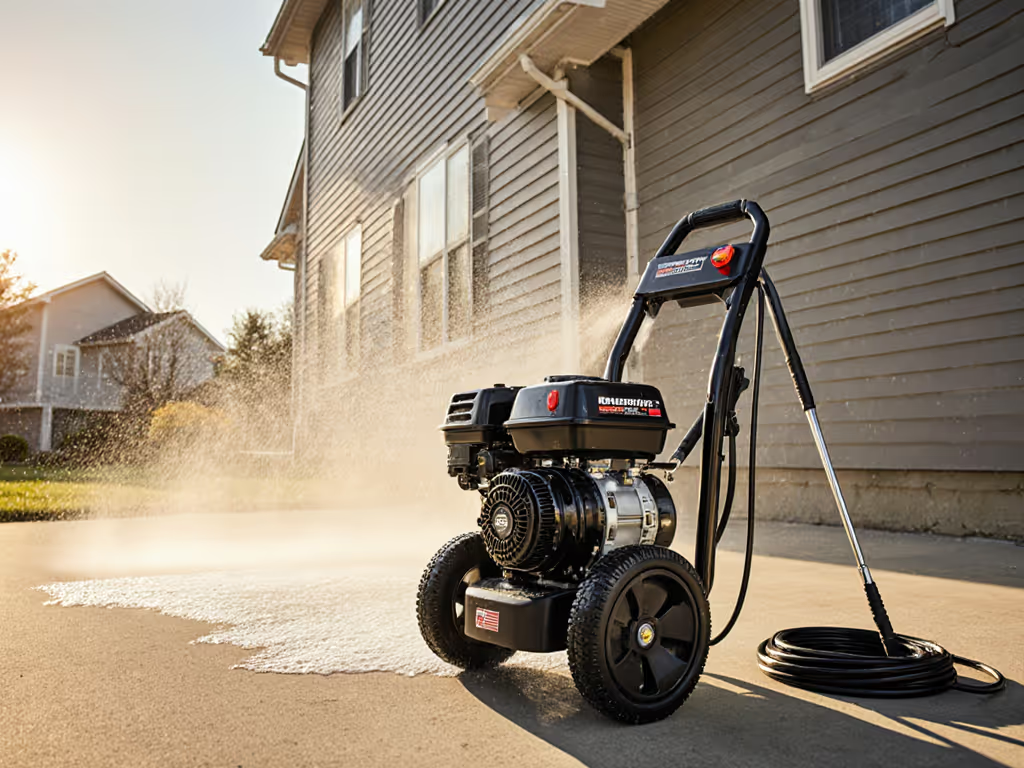
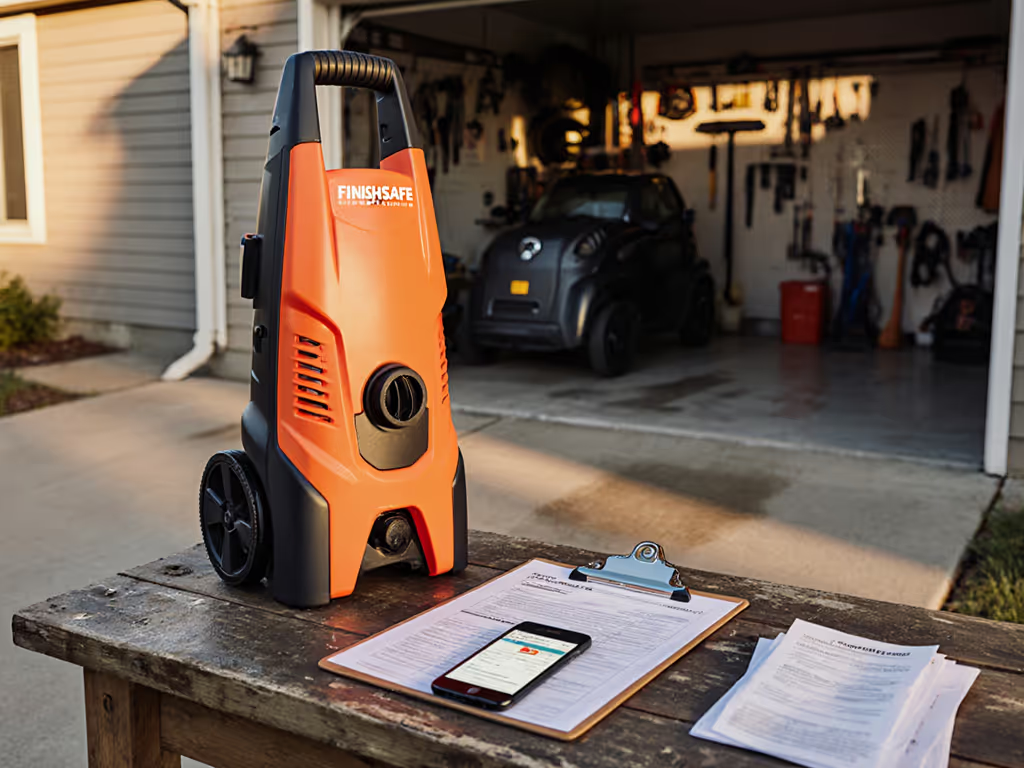
Understanding pressure washer CC ratings and engine size is critical for preserving delicate finishes, not just achieving raw power. As someone who bridges detailing and pressure washing, I see too many homeowners strip wax layers, etch pavers, or leave tiger-striping on siding because they misunderstood how engine displacement translates to actual surface impact. This isn't just about horsepower; it's about controlled energy delivery where chemistry does the heavy lift, and pressure just rinses smartly. If you're leaning into chemistry-first cleaning, review our detergent chemistry guide to choose formulas that do the heavy lifting.
Why CC Ratings Matter More Than Horsepower for Finish Safety
Gas-powered pressure washer specs often tout "CC" (cubic centimeters) instead of horsepower, a shift confusing many buyers. Here is what matters for your surfaces:
- CC measures engine displacement, not direct cleaning power. A 190cc engine doesn't automatically mean "safe for cars." What matters is how that displacement pairs with pump efficiency and unloader valves to deliver stable, low-PSI flow.
- The horsepower illusion: As Hydro Tek's president notes, some brands now list "gross kW" alongside CC. But chasing higher CC often backfires, it tempts users to crank PSI beyond what paint or composite can handle. That 212cc engine can generate 4,000 PSI, but should it? Only if you're stripping concrete, not washing a sun-bleached deck. For how PSI and GPM actually trade off at the surface, see our PSI vs GPM guide.
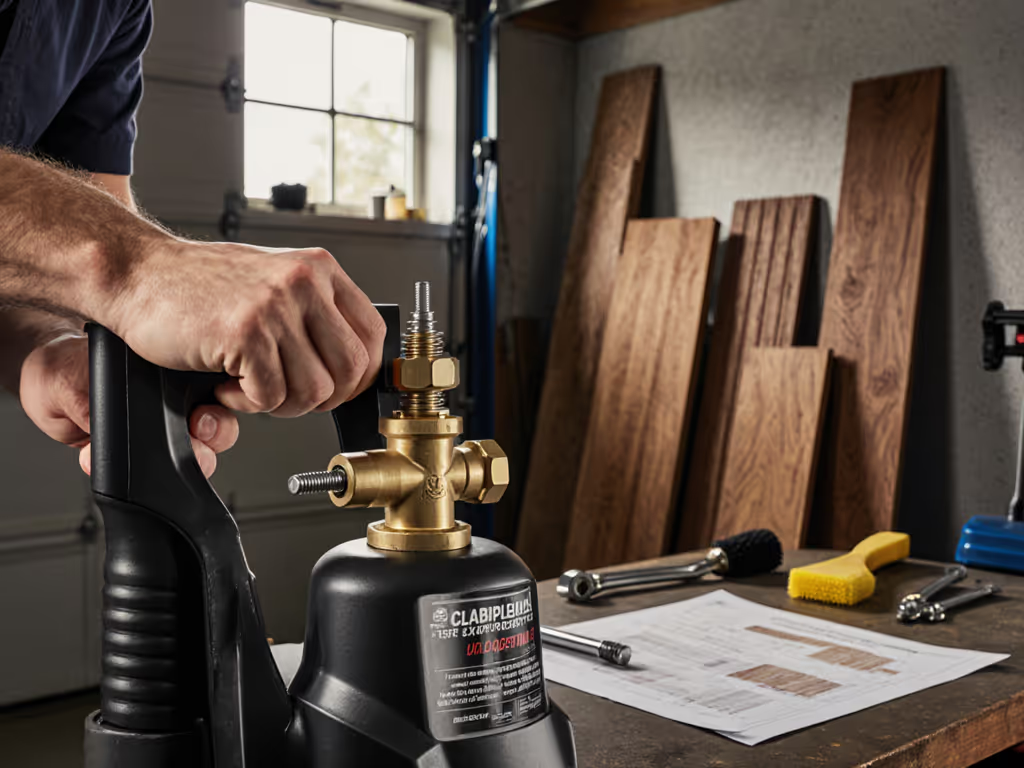
- Critical insight: Oversized engines cause pressure spikes when triggers cycle off/on. This "water hammer" effect scours soft wood grain and blows stucco joints. Right-sized engines (like 190cc for prosumer use) maintain steadier flow during dwell times, exactly why my wagon owner's aluminum rail streaks vanished after we dropped from 212cc to 190cc.
Chemistry first, pressure last. Your engine's job is to support consistent delivery of chelating agents, not brute force.
FAQ: Your Finish-Safety Questions Answered
"I see 190cc vs 212cc engines. How do I choose without damaging cedar siding?"
Prioritize engine efficiency factors over CC alone. A well-tuned 190cc with thermal relief valves often outperforms an underspec'd 212cc for delicate surfaces because:
- It avoids over-pressurization during dwell time (when detergent works)
- Lower RPMs reduce pump cavitation that creates micro-droplets = less oxidation risk
- Better runoff control for water-sensitive areas like deck gaps
Example: For cedar or oxidized aluminum, a 190cc engine running at 1,800 RPM delivers smoother 1,500 PSI @ 2.0 GPM, perfect for foam pre-wash with a chelating agent. Same task at 212cc/3,600 RPM? You'd need to throttle back so aggressively that flow becomes inconsistent, causing rinse streaks.
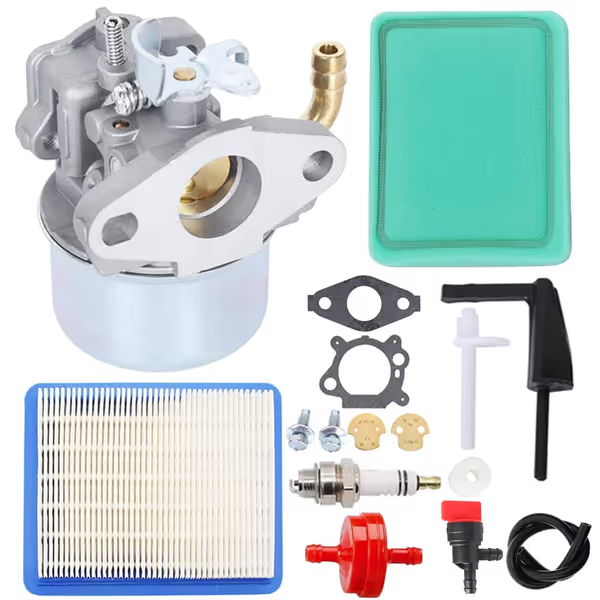
Pro Chaser Carburetor Carb
Restore peak performance and extend the life of your Briggs & Stratton engine.
$22.55
CompatibilityBriggs & Stratton 900 Series INTEK 190cc-206cc
CompatibilityBriggs & Stratton 900 Series INTEK 190cc-206cc
Pros
Complete kit for quick, reliable engine revival
Easy installation, restores like-new operation
Cons
Spark plug compatibility issues reported
Customers find the carburetor performs well, with one mentioning their wood chipper runs like new after installation. The product is easy to install, fits perfectly, and comes with a fuel filter, making it good value for money.
Customers find the carburetor performs well, with one mentioning their wood chipper runs like new after installation. The product is easy to install, fits perfectly, and comes with a fuel filter, making it good value for money.
Contextual note: Keeping your 190cc engine's carburetor clean (like the Pro Chaser model shown) ensures consistent RPM during extended dwell, critical for contact minimization on sensitive finishes.
"Does higher CC always mean faster cleaning?"
No, and this is where performance metrics get dangerous. Many assume "bigger CC = more cleaning power," but horsepower correlation misleads:
| Engine CC | Typical PSI/GPM | Cleaning Units (PSI × GPM) | Real-World Risk |
|---|---|---|---|
| 160cc | 2,500 PSI @ 2.0 GPM | 5,000 | Too aggressive for rubber seals |
| 190cc | 2,000 PSI @ 2.4 GPM | 4,800 | Ideal for coated metals |
| 212cc | 3,200 PSI @ 3.0 GPM | 9,600 | Blows mortar joints at close range |
Notice how the 190cc unit has lower cleaning units? Yet it cleans safer because higher GPM with lower PSI rinses oxidized surfaces without etching. The 212cc's raw power becomes a liability if you're 12 inches from vinyl siding, especially with a 0° tip.
"How do I match CC specs to my surfaces?"
Forget generic "PSI by surface" charts. Focus on gas engine specifications that enable chemistry-first workflows:
- For vehicles/painted surfaces: 190cc max. Paired with a 25° nozzle fan angle, it delivers 1,200-1,800 PSI at 2.0-2.4 GPM, enough for chelation without compromising ceramic coatings. Higher CC requires throttling down so far that flow becomes turbulent.
- For oxidized decks/fences: 160-190cc with thermal relief. The engine must sustain low RPM during 10-minute dwell times for alkaline cleaners to lift grime without raising wood grain. 212cc+ models overheat at low RPM, forcing premature rinsing.
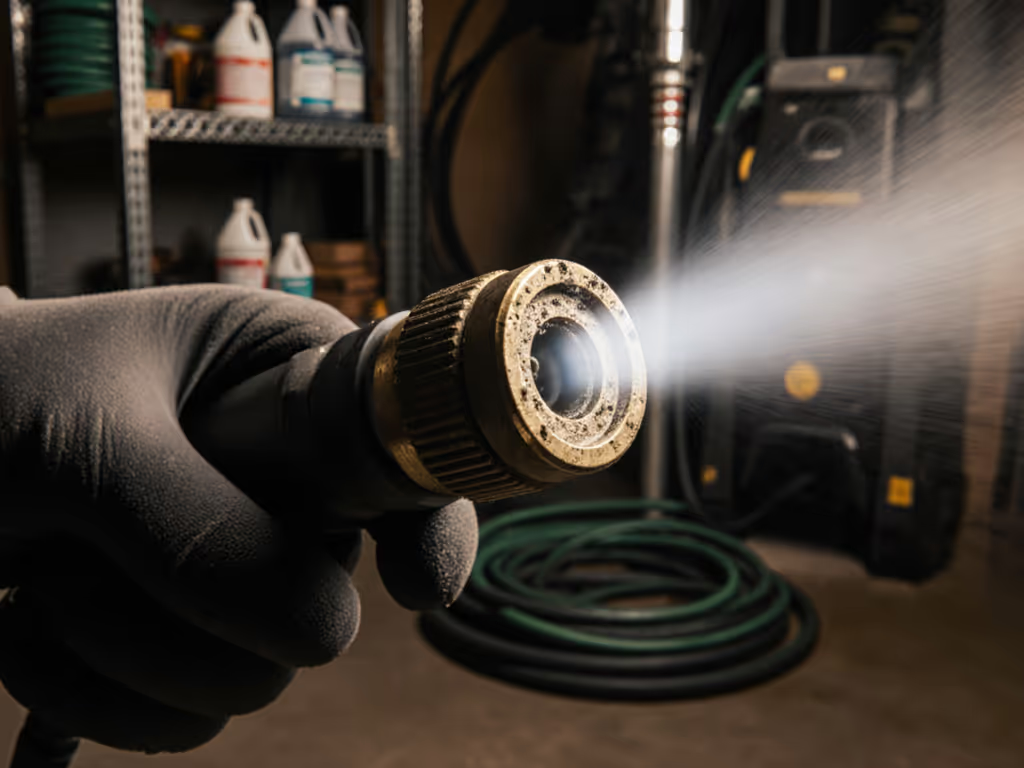
- Critical rule: Always extend nozzle-to-surface distance by 2-4" beyond what feels intuitive. That 190cc engine's "safe" 1,500 PSI at 12" becomes damaging at 6", even on concrete. Nozzle fan angle is your finish's best friend. To pick tips and accessories that protect fragile finishes, see our attachments for delicate surfaces.

The Finish-Safety Mindset: Beyond CC Numbers
When a client complained about chalky streaks under aluminum rails, we didn't upgrade their engine, we downgraded to 190cc, extended dwell time, and rinsed with a wider fan angle from farther back. Result? Gloss readings increased post-dry. This embodies my core truth: Delicate finishes deserve controlled energy.
Don't be seduced by bigger CC ratings. A properly spec'd 190cc unit with efficient fuel delivery (avoiding the surges that blow rubber trim) plus contact minimization techniques will outperform an oversized machine every time. Remember: Your pressure washer's real job isn't to blast dirt free, it's to deliver chemistry evenly and rinse smartly.
Related Articles