Pressure Washer Certification: Boost Credibility & Safety Today
By Sofia Alvarez • 12th Dec
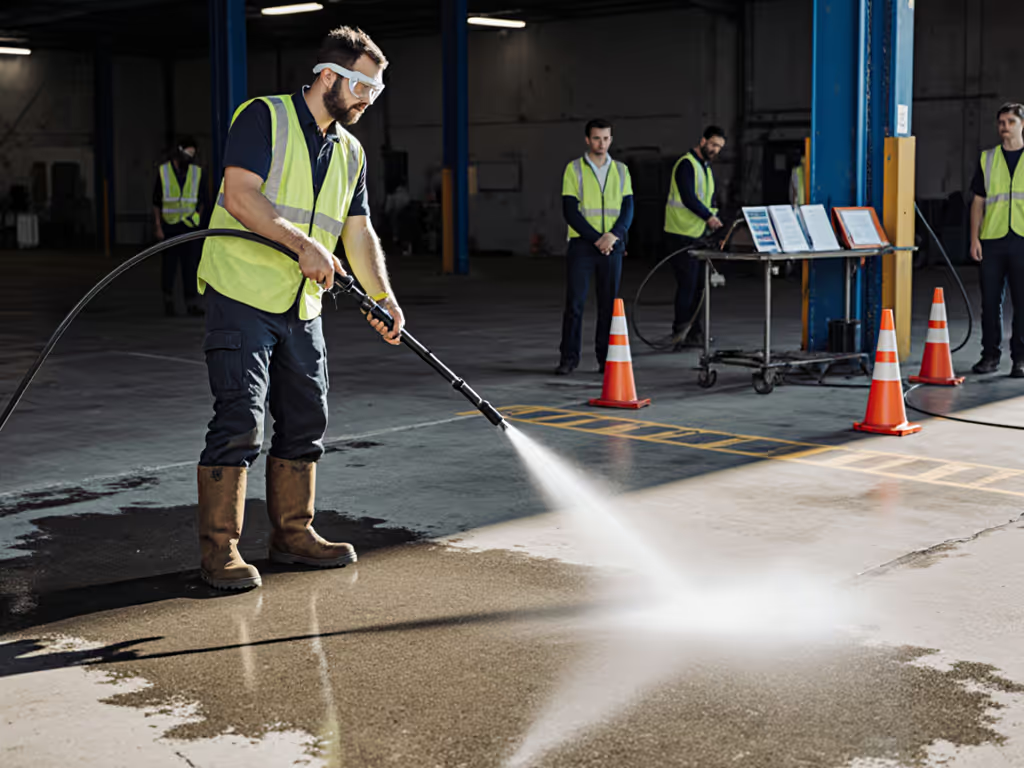
Picture this: You're spraying your cedar deck, aiming for that fresh-wood glow, but suddenly (whoosh) you've etched tiger stripes right into the surface. Or worse, you're cleaning a client's pavers, and high pressure blows the mortar joints. These nightmares happen when surface-specific knowledge meets guesswork. That's where pressure washer certification transforms chaos into confidence. For weekend warriors and budding operators, commercial operator training isn't just a resume booster, it's your damage-prevention toolkit. In this guide, I'll show exactly how certification builds safety sequencing into your muscle memory, so you protect surfaces and your reputation. Because if it isn't repeatable, it isn't teachable or safe.
Why Certification Solves Your Biggest Pain Points (Beyond the Paperwork)
You didn't buy that pressure washer to collect fines or redo work. Yet safety certification requirements tackle your top frustrations head-on:
- Fear of damage? Certification teaches why a 25° nozzle ruins soft brick but cleans concrete safely, translating PSI/GPM specs into visual flow rates and actual standoff distances. For a deeper primer on how pressure and flow work together, see our PSI vs GPM guide.
- Chemical confusion? Legit programs drill eco-compliant detergent mixing, dwell times, and runoff containment before you touch a trigger.
- Neighbor complaints? You'll learn noise-reduction sequences (like RPM throttling) that meet HOA rules without sacrificing power. Choosing quieter units helps too—compare models in our quiet pressure washer dB rankings.
I've seen too many homeowners skip training, then panic when streaks appear on vinyl siding. One couple near Savannah spent $400 fixing oxidized streaks because they didn't know to pre-rinse first. Certification turns those "oops" moments into predictable outcomes through structured sequencing.
Your trigger finger isn't the problem: your setup sequence is.
Spotting Legit Certification vs. Fluff Programs
Not all "certifications" are equal. Many are digital diplomas with zero hands-on validation. Focus on industry certification programs that mandate demonstrated skills:
- PWNA (Power Washers of North America): Their Certified Pressure Washing Technician path requires live nozzle-angle drills and wastewater containment tests. Ideal for residential operators.
- UAMCC (United Association of Mobile Contract Cleaners): Emphasizes real-world safety sequencing, like how to test patch on delicate surfaces before full passes. Best for mobile detailers.
Avoid programs that:
- Skip OSHA-compliant PPE drills (yes, even for homeowners!)
- Don't teach local environmental permit rules for runoff
- Charge extra for the "final exam" you already paid for
As OSHA reports confirm, 60% of pressure washing injuries happen during setup, not operation. To verify what those labels actually cover, read our ANSI/OSHA safety certifications explained. Training that ignores pre-work sequencing is just paperwork.
Your 3-Step Implementation Plan (Even With a Weekend Schedule)
Certification isn't about cramming textbooks. It's about building repeatable safety sequences into your workflow. Here's how to apply it immediately (no 40-hour class required).
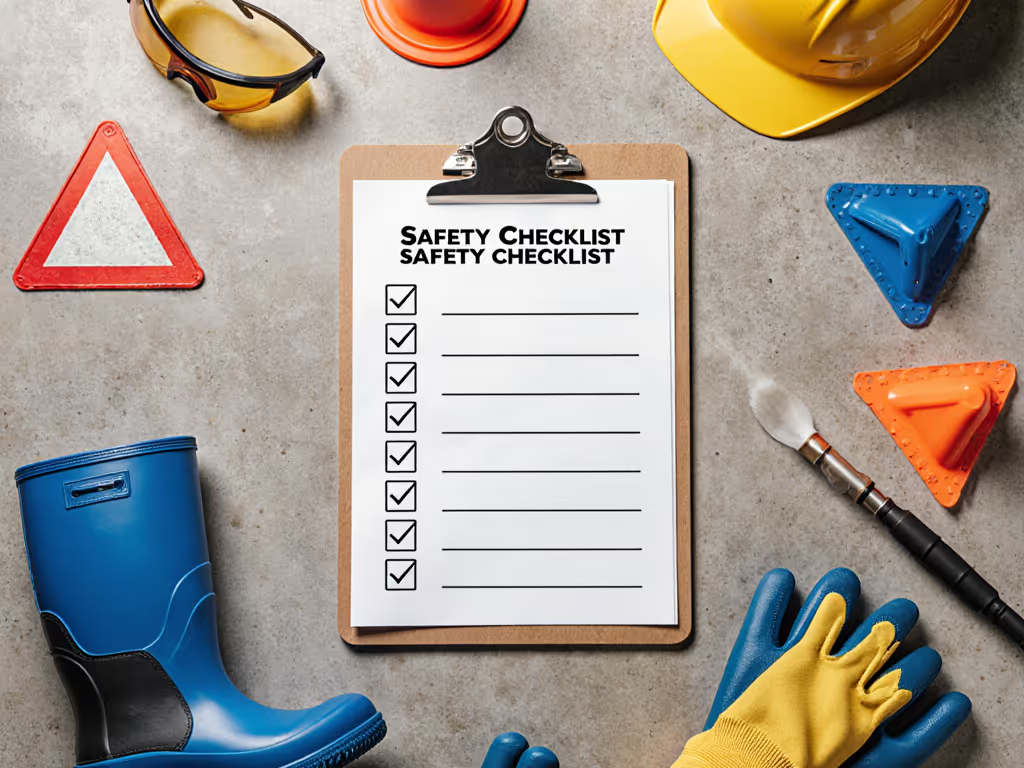
Step 1: Build Your Pre-Work Safety Checklist
Before firing up your machine, run this certification-grade sequence:
- Pre-rinse the surface lightly to identify stains/damage (saves rework later)
- Test patch in an inconspicuous area, always with your intended nozzle/detergent
- Calculate overlap for your wand width (e.g., 30% overlap for soft surfaces)
- Verify runoff containment (drain plugs? berms? recycled water setup?)
This isn't busywork. When I trained that teen for his fence job, we taped this exact checklist to his handle. Pause and inspect every panel after 2 passes, no exceptions. He avoided etching every knot because he followed the sequence, not just the nozzle.
Step 2: Match Certification to Your Surfaces (Not Just the Machine)
Residential operators often grab the "max PSI" nozzle and blast ahead. Bad idea. Certification teaches surface-first thinking:
| Surface Type | Safe Nozzle Angle | Max PSI (for <2,000 PSI units) | Critical Safety Step |
|---|---|---|---|
| Cedar Deck | 40° | 1,300 PSI | Pre-rinse + 12" standoff |
| Stucco | 25° | 1,800 PSI | Test patch on joint first |
| Concrete Driveway | 15° | 2,000 PSI | 50% overlap to avoid stripes |
Skip the "one nozzle fits all" myth. If stucco is on your list, follow our low-PSI stucco cleaning techniques before you start. Your certification should drill adjusting walk speed based on surface porosity, like slowing to 1 ft/sec for oxidized siding. This is where professional development opportunities pay off: you learn why speed matters more than pressure for finish safety.
Step 3: Create Your Field-Ready Safety Sequence
Certification's real value? Turning theory into muscle memory. After studying, implement this sequence every single job:
- Pre-rinse to assess surface vulnerability
- Test patch with full setup (nozzle + detergent + pressure)
- First pass at 50% throttle, 24" standoff, never full blast immediately
- Pause and inspect every panel after 2 passes (adjust pressure if needed)
- Final pass with 30% overlap, steady walk speed
- Verify runoff containment before packing up
This sequence prevented one contractor I know from etching a $15,000 composite patio. He'd skipped the test patch before but certified training made it non-negotiable. Now he films his pause and inspect checks for client transparency, boosting trust and avoiding callbacks.
Next Step: Claim Your Safety Confidence Today
You wouldn't wire a house without a guide, why risk your home's surfaces to guesswork? Pressure washer certification gives you the repeatable sequences that turn fear into pride. Here's your actionable first step:
When that homeowner in Savannah finally got certified, he texted me: "I cleaned my neighbor's deck without their HOA calling. First time I felt like a pro." That's the real certification payoff, knowing your sequence protects surfaces and relationships. So grab that wand, but do it safely. Brush up on fundamentals with our pressure washer safety guidelines. Your surfaces (and neighbors) will thank you.
Related Articles