House Pressure Washing: Smart Device Protection
By Arjun Patel • 6th May
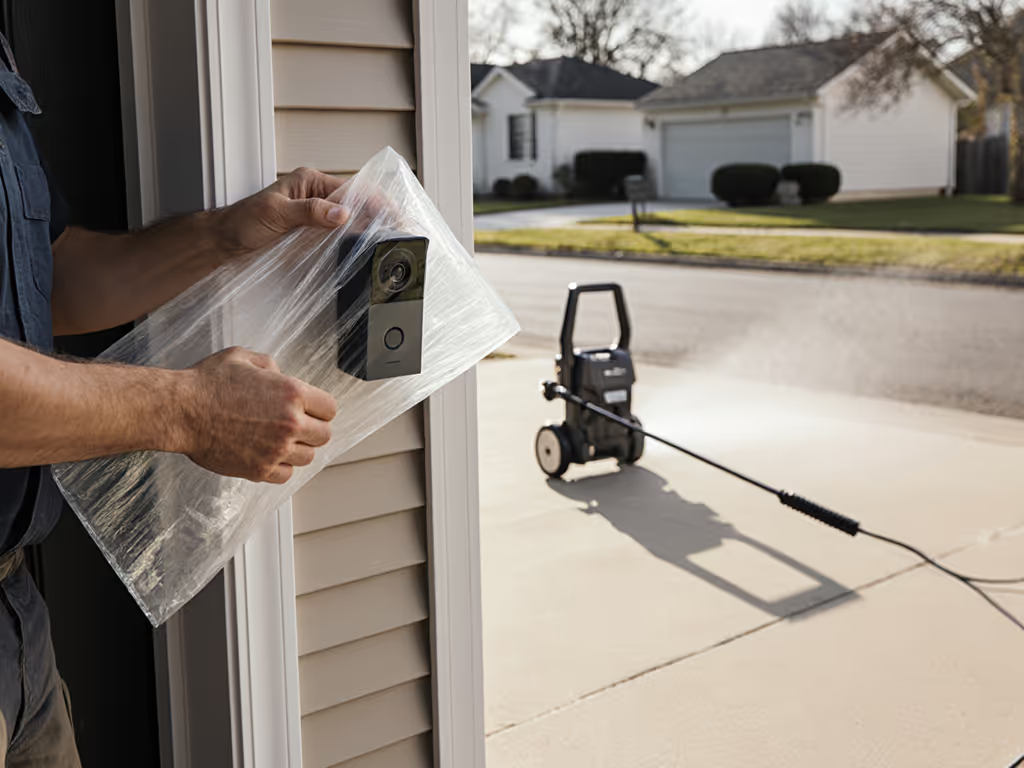
The modern outdoor home is no longer just siding, deck, and driveway. Smart doorbells, Wi-Fi cameras, connected thermostats, outdoor speakers, irrigation controllers, and even smart lighting now dot eaves, fences, and patios. When you're planning house pressure washing, the stakes have shifted. You're not only protecting wood and composite, you're safeguarding electronics-integrated surface gear that costs $150 to $800 per unit. A single miscalculation with PSI or standoff distance can mean a soaked circuit board and a service call, not just a cosmetic miss.
This article walks you through the comparative logic of protecting IoT devices during pressure washing, using data-driven pressure profiles, nozzle geometry, and technique adjustments that let you clean effectively while keeping electronics safe.
Why Pressure Washing Threatens Smart Devices
Smart outdoor devices are engineered with IP (Ingress Protection) ratings, a two-digit code that specifies dust and water resistance. A doorbell rated IP54 resists water spray from any angle, but that's spray, not a 2.5-GPM jet at 40° impact. A camera rated IP67 handles temporary immersion to 1 meter, yet doesn't account for high-velocity water forcing seals and seeping into screw ports.
The physics is straightforward: pressure equals force divided by area. To go deeper on how PSI and GPM work together, see our PSI vs GPM guide. At 3000 PSI with a 0.025-inch orifice (25° nozzle) and 12-inch standoff, you're concentrating roughly 3 kW of power into a beam the size of a pencil. Move that stream across a device housing for more than a second, and you've exceeded the seal margin the manufacturer tested. Beyond PSI, outdoor electronics cleaning risk hinges on dwell time (how long water dwells on the enclosure), angle of impact (perpendicular strikes are far more damaging than glancing), and proximity to vulnerable ports (antenna jacks, charging contacts, drain holes).
The best protection is a setup you'll use consistently without fear, that means knowing exactly which pressures and techniques keep devices safe.
Comparative Risk Framework: Device Types and Pressure Thresholds
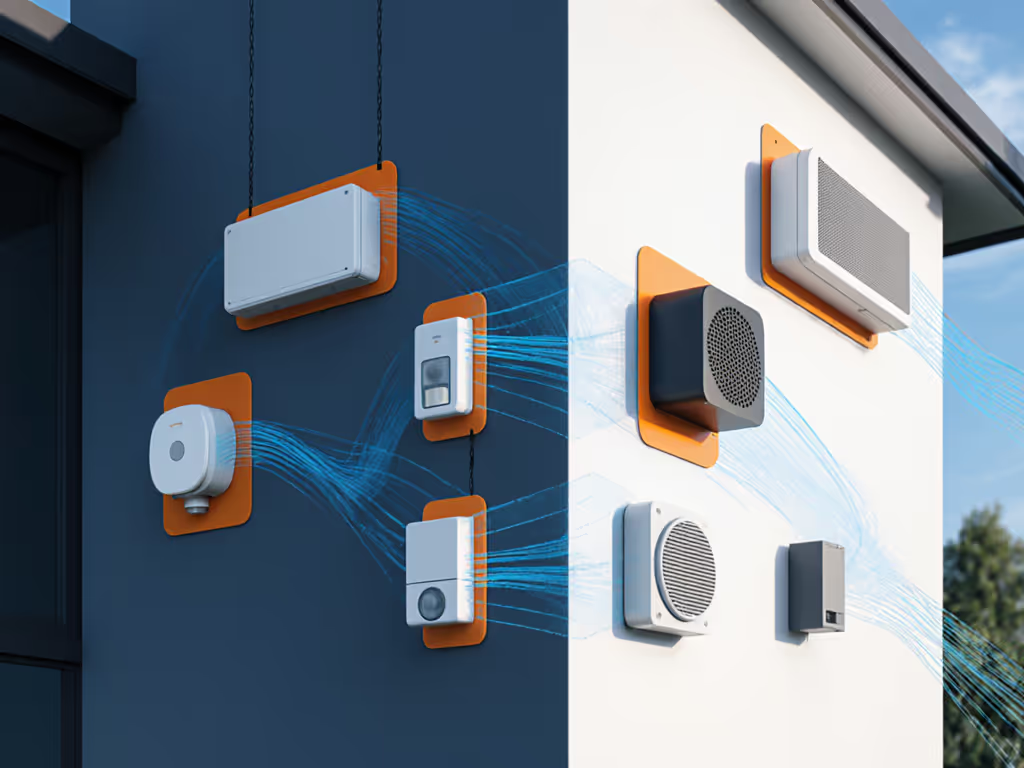
Different device classes tolerate different pressure levels. A structured comparison helps you build a mental model and adjust your system's flow-matched orifice accordingly.
Hardened Outdoor Cameras and Doorbells (IP67+)
Tolerance Band: 1500-2000 PSI, 40° or wider tip, 18-24 inch standoff minimum.
- These are sealed units with minimal external ports. Most failures occur when operators spray directly into the lens, which isn't optical glass but a plastic dome with internal seals.
- Verified approach: Switch to a 40° or 50° nozzle (lower pressure spread), maintain 20-inch distance, use a single pass rather than dwelling, and never angle downward to force water into the frame seam.
Wi-Fi Thermostats, Outdoor Hubs, and Smart Switches (IP54–IP55)
Tolerance Band: 1200-1800 PSI, 45° to 60° nozzle, 24+ inch standoff.
- These have vents for airflow or reset buttons that create ingress points. A 1500 PSI stream at 6 inches will push water through a vent membrane.
- Verified approach: Use a wider-angle nozzle and increase distance proportionally. A 60° nozzle at 1200 PSI feels gentler than a 25° at 2500 PSI, even at the same distance (because the energy is distributed). Maintain 25-30 inches and use a sweeping motion rather than a stationary spray.
Landscape Lighting and Wireless Sensors (IP65–IP68, but tight seals)
Tolerance Band: 1000-1500 PSI, 60° nozzle or wider, 30+ inch standoff.
- LED fixtures and soil sensors are compact and often have no exposed ports, but they're frequently mounted low on fences or planter edges. Water pooling around the base is the primary risk.
- Verified approach: Avoid spraying the base and mounting bracket altogether. Pre-treat nearby soil with a mild detergent rinse and let it drain naturally, or spot-clean by hand around sensitive gear.
Outdoor Speakers and Gateway Antennas (IP54–IP67, but exposed grilles)
Tolerance Band: 1200-1800 PSI, 45° nozzle, 20+ inch standoff.
- Mesh grilles allow water ingress at higher pressures. The antenna connector on gateways is especially vulnerable (forcing water toward it is the quickest path to failure).
- Verified approach: Angle your spray to glance off grilles rather than penetrate them. A 45° nozzle sweep at 18 inches is safer than a perpendicular 40° strike at 12 inches.
Waterproofing Verification Protocols: Pre- and Post-Wash Confirmation
Before and after cleaning, a 30-second audit dramatically reduces post-wash surprises and cost of callbacks.
Pre-Wash Checklist
- Physical inspection: Feel seams, ports, and gaskets for gaps. Press the device gently, a flex or give indicates compromised seals.
- IP rating lookup: Find the device's datasheet or packaging label. Cross-reference the number to your pressure profile table.
- Port mapping: Identify antenna jacks, USB ports, drain holes, microphone vents, and battery compartments. Plan your spray angles to avoid these by 24+ inches.
- Mounting survey: Note if the device is sheltered (under an overhang) or exposed (side of a post). Exposed units require more conservative pressure and angle.
Post-Wash Confirmation
- Visual inspection: Check for water beads inside transparent domes or frost on LED elements, both signs of seal breach.
- Function test: Power-cycle the device if it's battery-backed or wireless; confirm Wi-Fi connection or Bluetooth pairing if applicable.
- Moisture logging: If the device has an app, check for sensor warnings (humidity, temperature spikes) that might indicate internal moisture ingress.
- 72-hour monitor: Leave the device powered off for 24-48 hours if you suspect water entry. This allows trapped moisture to evaporate before circuits energize. Some smart devices will show error codes or connectivity drops if water is present.
Flow-Matching and Technique: The Efficiency Anchor
A smart home maintenance plan that protects electronics also reduces total cleaning time and water waste (two hallmarks of a well-matched system). To cut usage even further, apply the techniques in our pressure washer water conservation guide.
The Price-to-Performance Principle
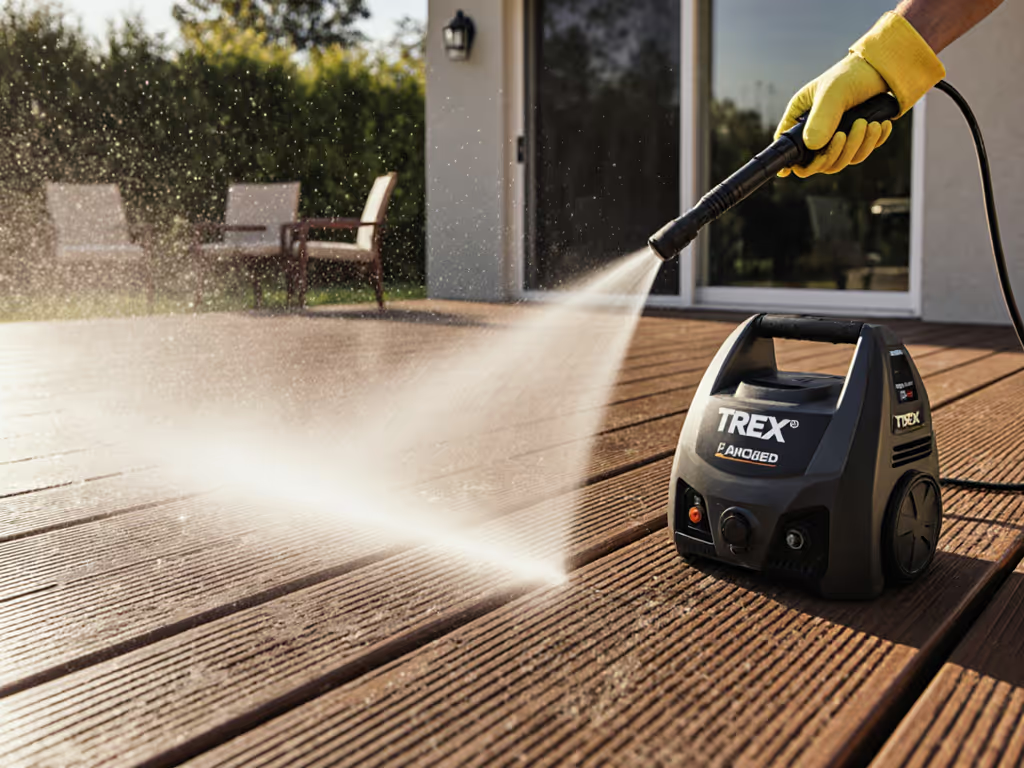
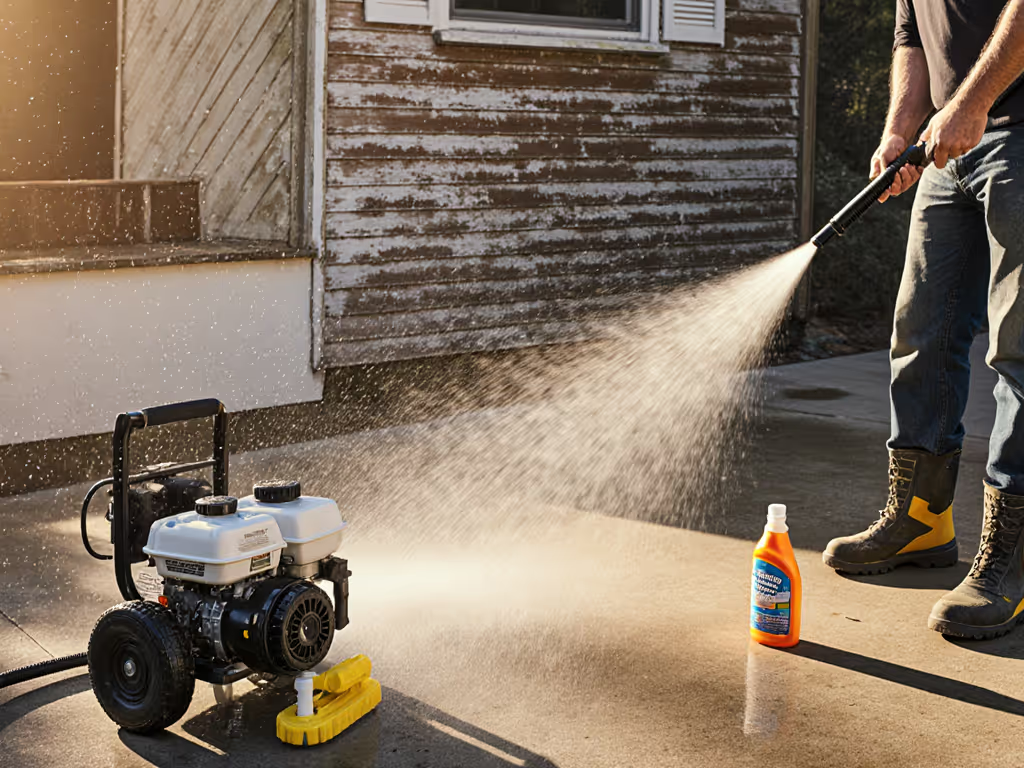
Don't overbuy pressure. For a full breakdown of electric vs gas pressure washers, review our surface-safe comparison. A 2500 PSI, 2.5 GPM electric unit handles 95% of residential exterior surfaces and costs $300-$500. A 4000 PSI gas rig costs $600-$1200 and introduces noise (typically 85-92 dB(A) at 25 ft), maintenance burden, and storage logistics. For properties with smart devices, the smaller electric rig is lower risk, faster to deploy, and genuinely adequate.
Flow-Matched Orifice Selection
Your orifice size must suit your GPM. A 2.5 GPM pump paired with a 0.040-inch orifice (40° nozzle) at 2500 PSI yields a gentle, controllable stream. That same pump with a 0.025-inch orifice at 3500 PSI becomes aggressive and harder to control near sensitive gear. Match your tip to your machine's flow; don't chase higher PSI to compensate for poor flow distribution.
Standoff Distance and Angle Technique
Here's a repeatable formula used by professional detailers:
- Start 24 inches from the device.
- Use a 45° to 60° nozzle.
- Sweep (don't dwell) in a single horizontal pass.
- If the surface around the device isn't clean enough after one pass, increase distance to 30 inches and repeat with a narrower nozzle (35-40°) rather than moving closer.
This approach keeps dwell time under 2 seconds per zone, which is well inside the seal tolerance of most IP54+ devices.
Hose Drag and Quick-Connect Setup
A tangled or heavy hose creates fatigue and encourages operator shortcuts (like holding the nozzle too close to speed up cleaning). Use a lightweight hose with a quick-connect swivel at the spray wand. We tested pressure washer hoses for durability and kink resistance to help you choose one that won't fight you mid-job. This lets you change nozzles without shutting down the pump, reducing cycle time and temptation to improvise near sensitive areas.
Real-World Outcome: Water Budget and Noise
A 2.5 GPM electric rig at 2500 PSI, flow-matched to a 0.040-inch orifice and operated at 18-inch standoff with a 45° nozzle, cleans most residential driveways (about 1000 sq ft) in roughly 60-75 minutes and uses ~150-190 gallons. That's comfortably within municipal restrictions in drought-prone regions (typically 50-100 gallons/hour cap) and produces 72-78 dB(A) at 25 ft (roughly the sound of a lawn mower, not a chain saw). If noise is a concern, consult our quiet pressure washer dB comparison to choose neighbor-friendly models. The system is quiet enough for early morning or evening work without anger from neighbors, yet powerful enough to remove most algae, dirt, and oxidation when technique and detergent are matched to the surface.
Compare that to a 3500 PSI gas unit, which often delivers 3.5 GPM and consumes 210-280 gallons for the same 1000 sq ft, operates at 85-90 dB(A), and tempts careless operators to spray aggressively near electronics due to perceived "power overconfidence".
Summary and Final Verdict
Protecting IoT devices during pressure washing is not about buying a weaker machine or avoiding cleaning altogether. It's about choosing a system whose power and control are matched to your surfaces and your smart devices, then applying a simple, repeatable technique.
Buy right once: Select a pressure class (2000-2500 PSI for homes with smart devices), match your nozzle to your flow, confirm device IP ratings and port locations before you start, and maintain 20-30 inch standoff with a 45-60° sweep. These disciplines take no extra time, prevent costly water damage, and let you clean with confidence.
Quiet, quick, and clean (spend once, use less water). Your devices will thank you, your neighbors will appreciate the lower noise, and your water bill will reflect the precision. A home that shines and functions is the goal; a system you'll actually use without second-guessing is how you get there.
Related Articles