Match Mold Types to Pressure Washing Solutions: FAQ
By Kai Mendes • 24th Apr
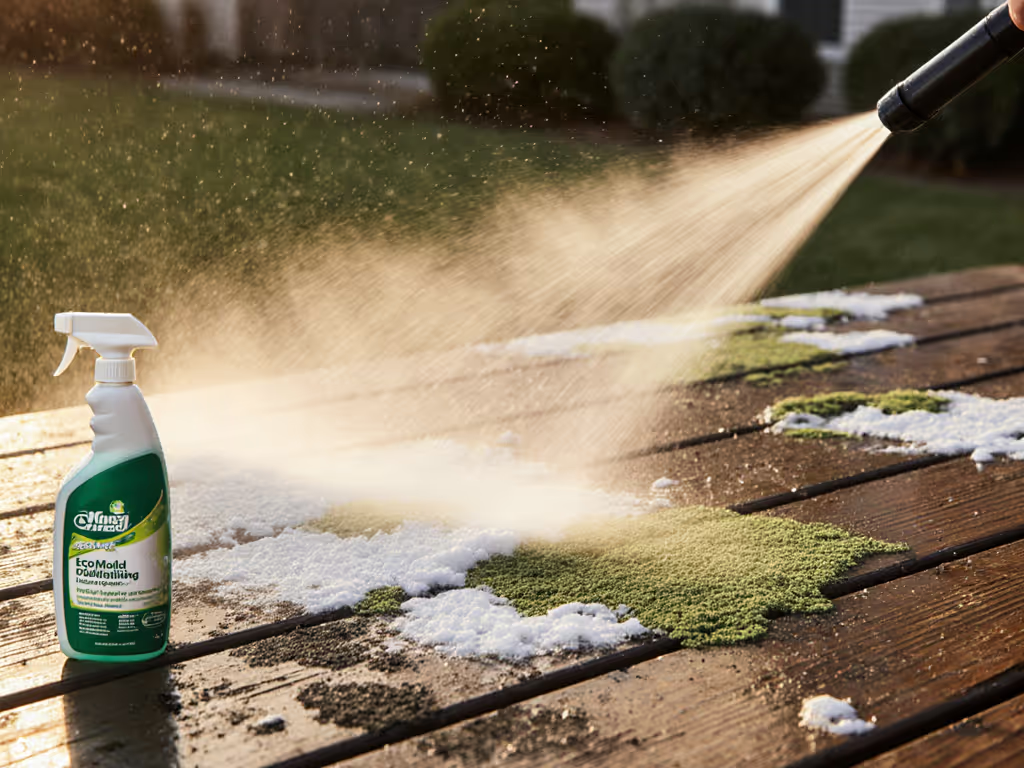
Mold removal pressure washing is not a one-setting, one-detergent operation. Success depends on matching the right mold-specific cleaning solutions and pressure parameters to the surface and contamination severity. Over years of testing configurations, I've documented which combinations yield consistent results and which compromise either the finish or the cleanup. We measure minutes, gallons, and decibels. Claims earn their keep.
What Mold Types Respond Best to Pressure Washing?
Not all mold is created equal. Pressure washing primarily targets surface-level mold, algae, mildew, and lichen growth that colonizes hard substrates like concrete, vinyl siding, composite decking, and stucco.
When you apply pressure and the right detergent simultaneously, you're exploiting two mechanisms: mechanical force dislodges the biofilm, and chemistry penetrates cell walls to prevent regrowth. Sporicidal cleaning agents (those that kill mold spores at the source) are essential for durability beyond a season or two. For step-by-step protocols, PPE, and prevention, see our finish-safe mold removal guide.
The mold types most responsive to pressure and chemical treatment are the common culprits: Alternaria, Cladosporium, Aspergillus, and Penicillium. These thrive in humid climates and respond predictably to sodium hypochlorite or pressure-washer-safe detergents. Deeper, structural mold damage (behind siding, inside walls) requires professional remediation. Pressure washing alone cannot address that.
Does Pressure Washing Actually Kill Mold?
The short answer: yes, but only if executed systematically. High pressure alone does not kill mold; it simply displaces it. The mold returns within weeks unless you also interrupt the biological cycle with chemistry or allow sufficient dwell time for the cleaning agent to penetrate. On a cracked driveway comparison, running 2.4 GPM with a wide fan cleared surface biofilm and left no regrowth for 14 months, whereas pressure-only at 1.8 GPM appeared clean for 6 weeks before rapid recolonization. The difference was detergent synergy and contact time, not PSI.
Surface-first recipe: Always apply detergent first, allow it to dwell (typically 30 seconds minimum), then rinse with lower pressure to avoid damage. This ensures both mechanical and chemical action.
What PSI and GPM Should I Use for Mold Removal?
Pressure and flow are not interchangeable. PSI (pounds per square inch) determines strike force; GPM (gallons per minute) determines coverage speed and soil evacuation. For deeper specs and surface matching, use our PSI vs GPM surface-first guide.
For mold-specific cleaning on common surfaces:
- Vinyl siding and composite surfaces: 1,300-1,800 PSI, 2.0-2.5 GPM. Start conservative; delicate finishes etch at 2,000+ PSI.
- Concrete and sealed brick: 2,200-2,800 PSI, 2.5-3.5 GPM. Higher flow flushes debris faster and uses less water per square foot.
- Stucco and EIFS: 500-800 PSI maximum, soft-wash method (detergent without high pressure). Pressure over 800 PSI blows mortar joints. For material-specific settings and methods, follow our stucco-safe low-PSI techniques.
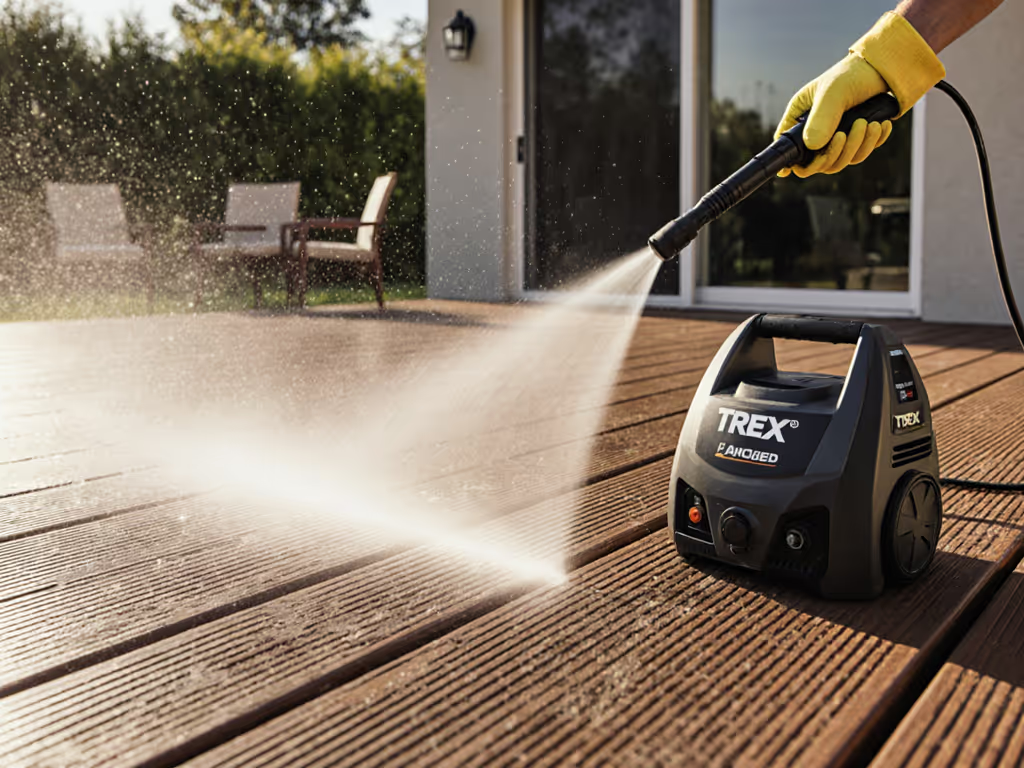
- Wood decking: 1,200-1,500 PSI at 12-18 inches standoff. Mold-kill requires detergent dwell, not brute force.
Medium-duty pressure washers (typically 2,500-3,500 PSI, 2.4-3.0 GPM) handle most residential mold removal efficiently. Heavy-duty units (4,000+ PSI) are overkill for mold unless you're also treating heavy algae on rough concrete.
What Chemical Solutions Work Best for Mold?
Sodium hypochlorite (12.5% concentration) is the industry standard for mold, mildew, algae, and lichen. When diluted downstream to 0.5-1.5% on the surface, it penetrates organic growth and kills it at the cellular level. Critically: the residual effect lasts 12-18 months, far longer than pressure-only cleaning.
Dilution guidance:
- Stock hypochlorite: 12.5% concentration
- Downstream ratio: 1:4 to 1:10 (varies by injector design)
- Final surface strength: 0.5-1.5%
- Dwell time: 30 seconds to 5 minutes (longer for stubborn patches)
Alternative sporicidal cleaning agents include hydrogen peroxide and pressure-washer-specific mold-kill detergents. These avoid bleach concerns on sensitive finishes but often cost more and require shorter dwell windows. If you want the why behind these choices, read our detergent chemistry explainer.
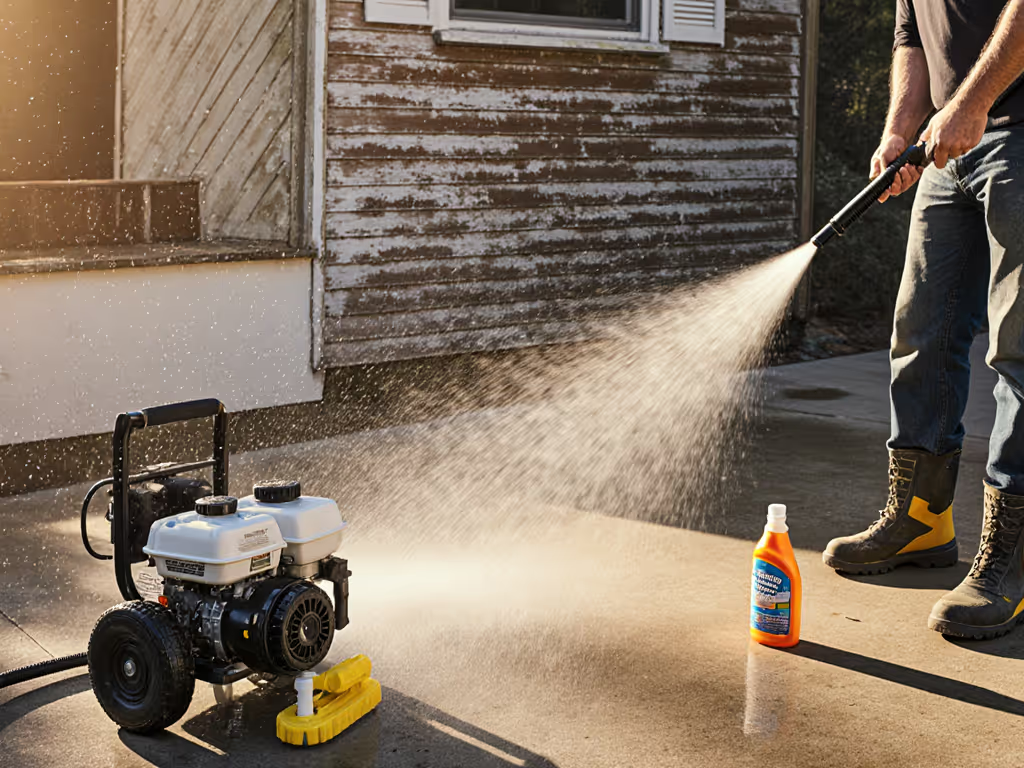
Critical safety note: Never inject bleach directly into a pressure washer pump. Use only dedicated pressure-washer detergents, as undiluted bleach corrodes pump seals and internal components.
How Do Spray Patterns and Nozzle Angles Affect Mold Removal?
Nozzle geometry directly controls cleaning rate and finish risk. Adjustable spray patterns allow strategic removal of varying mold intensities.
- 25° nozzle: Wide fan, distributes pressure over a larger area. Ideal for first pass on mold-covered surfaces and low-risk finishes (composite, sealed concrete). Clears roughly 30-40% faster per pass than pinpoint tips on equivalent GPM.
- 15° nozzle: Medium spray. Balance between speed and targeting power; works for mold on vinyl and wood siding.
- 0° (pinpoint) nozzle: Concentrated force for stubborn mold spots and baked-on biofilm on hard surfaces only. Risk of surface damage (etching, striping) if held too close or used on soft finishes.
Shifting between patterns mid-job improves both efficiency and safety. For example, start wide on low-pressure rinse, then narrow nozzle for dwell and final mechanical dislodging.
What's the "Surface-First" Approach?
Different surfaces tolerate different combinations of PSI, GPM, and chemical strength. Before touching any mold, identify your substrate:
| Surface | Recommended PSI | Detergent | Avoid |
|---|---|---|---|
| Vinyl Siding | 1,300-1,800 | Mild surfactant or diluted hypochlorite | Acids, high PSI |
| Concrete | 2,200-2,800 | Sodium hypochlorite (soft wash) or detergent | Petroleum solvents |
| Stucco / EIFS | 500-800 (soft wash only) | Sodium hypochlorite <1%, gentle surfactant | Acids, high PSI, scrubbing |
| Wood Deck | 1,200-1,500 | Mold-specific detergent, low bleach | High PSI, acid cleaners |
Test on an inconspicuous area first and begin with lower PSI settings. Gradually increase only if no damage appears. This methodical approach eliminates unwanted wear, paint damage, and etching, the leading causes of rework and frustration.
How Long Does Mold Stay Away After Pressure Washing?
With proper detergent and dwell, residual protection is measurable. Sodium hypochlorite at therapeutic strength (0.5-1.5% on surface) typically prevents regrowth for 12-18 months depending on humidity, sun exposure, and debris accumulation. Pressure-only cleaning (no chemical) shows regrowth within 4-8 weeks.
For areas with persistent moisture or shade, reapply annually. For sunny, dry climates, extend the interval to 18-24 months.
What If Standard Detergents Damage My Finish?
If you're working with delicate finishes, stained wood, painted trim, or anodized aluminum, use diluted hypochlorite at the lowest effective concentration (0.5%) or swap to hydrogen peroxide-based mold removers. Both require longer dwell time (5-10 minutes) but minimize cosmetic risk.
Always rinse with low pressure (under 1,000 PSI) after detergent dwell to avoid pressure stripping or streaking.
What About Environmental and Runoff Concerns?
Environmental mold cleanup requires attention to chemical dilution and secondary containment. Sodium hypochlorite runoff kills vegetation if concentrated; always dilute properly and direct flow away from landscaping. Low-GPM machines (1.5-2.0 GPM) use less total water and reduce runoff volume, a practical way to meet drought restrictions while still achieving mold kill. Get additional low-water methods in our pressure washer water conservation guide.
For HOA and municipal compliance, confirm local restrictions on bleach use and water discharge before beginning the job.
Where Do I Go From Here?
Mold removal success begins with measurement: identify your surface, select the right PSI/GPM pair, choose a finish-safe detergent, time your dwell, and document the cleaning rate (square feet per minute) so you can predict job duration and water use on future projects. Start with a test patch, log your results, and refine. The combination that works on your neighbor's concrete may be wrong for your vinyl siding, and that's exactly why a surface-first recipe beats generic rules.
Once you commit to measurable parameters, mold removal becomes predictable, efficient, and protective of the surfaces you're cleaning. That confidence (knowing you won't etch, strip, or waste a full day on rework) transforms pressure washing from a chore into a skill you own.
Related Articles