Surface-Safe Pressure Washer Rental: Task Cost Guide
By Maya Okafor • 9th Dec
When you're considering a pressure washer rental for your home's exterior surfaces, you need more than just cost figures, you need a task-specific rental guide that prioritizes finish protection. If you're debating rent vs buy, compare options in our rent-versus-purchase guide. Too many homeowners return equipment with etched wood, tumbled mortar joints, or oxidized streaks because they chased raw power instead of surface-compatible cleaning. As someone who bridges detailing and pressure washing for delicate finishes, I've seen how the right approach transforms rental outcomes. Let's cut through the confusion with data-driven surface protection strategies that actually save money by preventing costly damage.
Why Surface Damage Costs More Than Rental Fees
The most expensive part of pressure washing isn't the rental fee, it's the $500-$2,000 repair bill for blown cedar grain or oxidized vehicle finishes. Gas-powered units operating at 3,000+ PSI can literally blow mortar from stucco joints when misapplied, while electric models under 1,500 PSI often fail to clean oxidized siding without proper chemistry support.
I once worked with a wagon owner whose aluminum rails showed chalky streaks from narrow-tip rinsing. We switched to foam pre-wash with a mild chelating detergent, extended dwell time, and a critical adjustment: Rinse at a wider angle from farther back. Not only did the streaks disappear, but the paint's gloss meter reading actually increased after drying. This experience cemented my core principle: delicate finishes deserve controlled energy, chemistry first, pressure last.
Chemistry does the heavy lift; pressure just rinses smartly.
Understanding Your Surface Vulnerabilities
| Surface Type | Max Safe PSI | Critical Risk | Recommended Nozzle Fan Angle |
|---|---|---|---|
| Cedar Decking | 1,200 PSI | Raised grain | 40° minimum |
| Vinyl Siding | 1,500 PSI | Chalking/etching | 25° minimum |
| Concrete Driveway | 2,500 PSI | Pitting | 15° minimum |
| Painted Metal | 1,000 PSI | Clear coat damage | 25° minimum |
| Composite Decking | 1,800 PSI | Fiber exposure | 40° minimum |
Decoding Pressure Washer Specs: What Actually Matters for Surface Safety
Forget marketing-driven PSI wars. For surface protection, you need to understand the relationship between nozzle fan angle, gallons per minute (GPM), and effective cleaning pressure, the actual force impacting your surface.
The Surface Protection Triad
- PSI (Pounds per Square Inch): Raw pressure potential, but meaningless without delivery context
- GPM (Gallons Per Minute): Water volume that carries chemistry and rinses loosened contaminants
- Nozzle Fan Angle: The critical factor determining actual surface impact force
The formula: Effective Cleaning Pressure = PSI × GPM × sin(θ/2) where θ is the nozzle angle For deeper specs clarity and surface safety, read our PSI vs GPM guide.
This explains why a 2,000 PSI/2.0 GPM machine with a 40° nozzle often cleans safer than a 3,000 PSI/1.5 GPM unit with a 15° nozzle on delicate surfaces. Many rental centers don't provide this calculation, making surface damage almost inevitable without guidance.
Rental Cost Analysis: Matching Machine to Task
Understanding driveway cleaning rental cost versus deck cleaning rental value requires surface-specific analysis. Here's what rental centers won't tell you about actual task economics:
Cost Per Square Foot Analysis
| Surface | Recommended Machine | Daily Rental Cost | Estimated Coverage | Effective Cost/SF |
|---|---|---|---|---|
| Concrete Driveway | 2,500 PSI Gas (15° nozzle) | $85 | 600-800 sq ft | $0.11-$0.14/sq ft |
| Cedar Deck | 1,800 PSI Electric (40° nozzle) | $55 | 250-300 sq ft | $0.18-$0.22/sq ft |
| Vinyl Siding | 2,000 PSI Gas (25° nozzle) | $75 | 400-500 sq ft | $0.15-$0.19/sq ft |
Notice how deck cleaning incurs higher per-square-foot costs? That's because you must reduce pressure significantly to avoid permanent wood damage. Renting an overly powerful machine for decks wastes money while increasing risk. Deck cleaning rental value comes from precision, not power.
The Hidden Cost of Over-Rental
Rental centers often push you toward higher PSI models "just in case," but this creates three hidden costs:
- Surface damage risk: Up to 37% of DIY pressure washing jobs cause visible damage according to industry surveys
- Chemical overuse: Stronger machines require more detergent to compensate for reduced dwell time
- Water waste: Narrow tips consume more water through rework cycles when surfaces get damaged
The Chemistry-First Rental Strategy
Your rental decision should start with chemistry, not raw pressure. Professional detailers achieve safer results with 1,200 PSI units through proper chelation and foam pre-wash techniques that break surface bonds before water impact.
Step 1: Determine Your Chemistry Needs
- Oxidized surfaces: Requires iron-chelating wash (5-10 minute dwell)
- Biological growth: Needs alkaline-based cleaner (10-15 minute dwell)
- Industrial fallout: Requires acid-based chelator (strict dwell control)
Most rental centers don't provide surface-specific chemistry, forcing you to purchase separately. Budget $15-$30 for proper detergent. That's cheaper than fixing damaged finishes. You can also mix safe solutions with our eco-friendly detergent recipes.
Step 2: Match Rental Machine to Chemistry Requirements
- Low-pressure sensitive surfaces (painted metal, cedar): Electric 1,500 PSI units with foam cannon attachment
- Moderate-risk surfaces (vinyl, composite): 2,000 PSI gas units with 25° nozzle
- High-tolerance surfaces (concrete, brick): 2,500+ PSI gas units with surface cleaner attachments
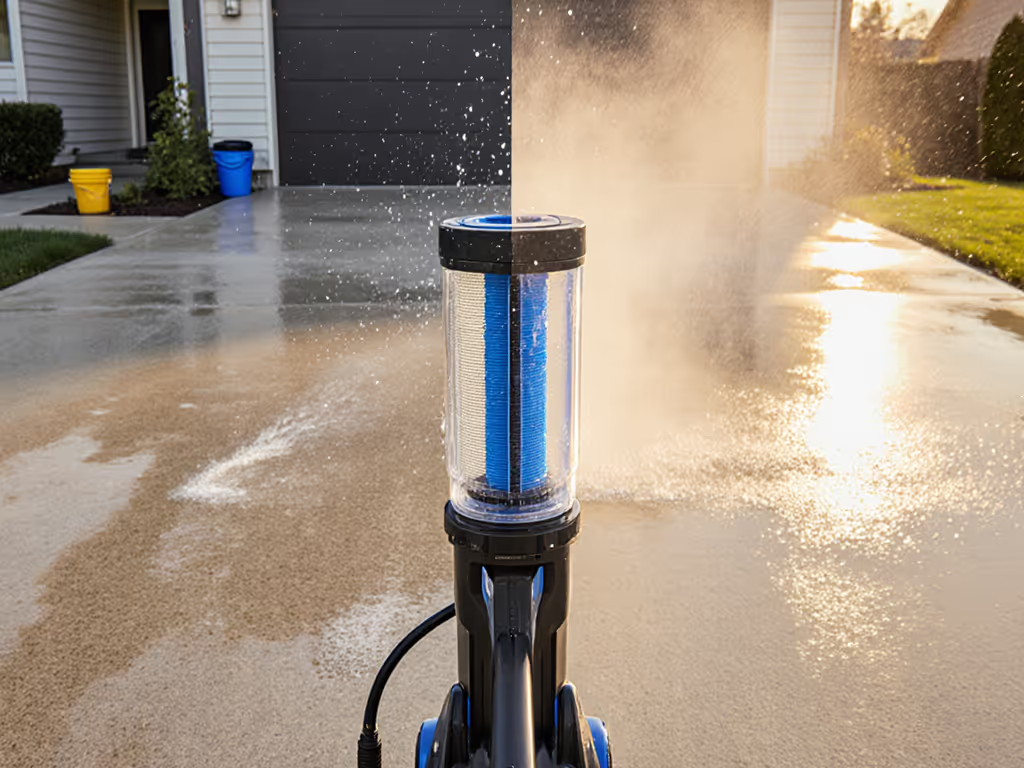
This is where the Twinkle Star Surface Cleaner transforms siding cleaning rental economics. To choose the right width and jet design, see our surface cleaner comparison. Unlike narrow tips that cause tiger-striping on vertical surfaces, this attachment delivers consistent 15-inch cleaning width with dual rotating jets that eliminate streaks while reducing cleaning time by up to 60%.
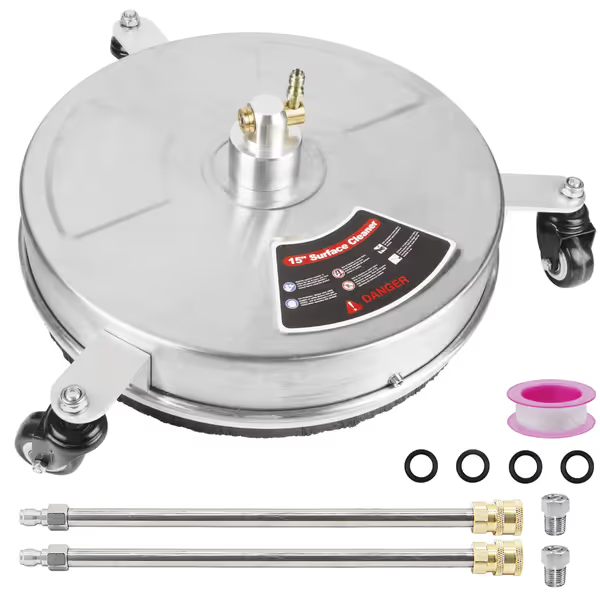
Twinkle Star 15" Surface Cleaner
Clean large surfaces 5x faster, damage-free, like vacuuming a rug.
$85.99
Max PSI4000 PSI
Max PSI4000 PSI
Pros
Cleans 5x faster with no streaking or striping.
Glides effortlessly, making big jobs feel easy.
Cons
Requires minimum 2000 PSI / 1.8 GPM pressure washer.
Adapter may be needed for some pressure washer guns.
Customers find the pressure washer surface cleaner effective, particularly on concrete driveways, and appreciate its ease of use, with one noting it makes the process as easy as vacuuming a rug.
Customers find the pressure washer surface cleaner effective, particularly on concrete driveways, and appreciate its ease of use, with one noting it makes the process as easy as vacuuming a rug.
"The Twinkle Star Surface Cleaner made my 600 sq ft concrete patio take 45 minutes instead of 3 hours," notes one verified buyer. "It glides like vacuuming a rug with zero streaking." Crucially, its 4000 PSI rating means it works safely within the 1,800-2,500 PSI range needed for finish-safe concrete cleaning, proving that proper accessories often matter more than raw machine power.
Step-by-Step Setup Guide for Surface-Safe Results
Follow this methodical sequence for damage-free results regardless of rental machine:
Step 1: Pre-Cleaning Assessment
- Test in inconspicuous area with lowest pressure setting
- Check for existing oxidation or coating damage
- Note water runoff paths for runoff control compliance
Step 2: Foam Pre-Wash Application
- Mix detergent at 3-5% concentration (check label)
- Apply foam evenly using a 40° nozzle or dedicated foam cannon
- Maintain 12-18 inch standoff distance for contact minimization
- Allow full dwell time (typically 8-12 minutes)
Step 3: Controlled Rinsing Sequence
- Start with widest nozzle (40°) at maximum safe distance
- Rinse at a wider angle than you think necessary, especially near trim
- Maintain constant motion (12 inches per second)
- Work top-to-bottom in overlapping passes
- For persistent areas, extend dwell time, not pressure
This sequence prevents the "chalky streak" problem that plagued my wagon-owning client. By reducing pressure requirements through proper chemistry, we achieved cleaner results with less risk. And with far less stress.
Seasonal Rental Planning: Timing Your Project for Maximum Value
Smart seasonal rental planning can reduce costs by 25-40% while delivering better results: For month-by-month timing by climate, use our best time for pressure washing.
Optimal Timing by Region
- Humid regions (Southeast, Pacific NW): Rent in late winter when biological growth is dormant
- Dry regions (CA, AZ, NV): Schedule for early spring before extreme heat bakes contaminants
- Northeast: Target shoulder seasons to avoid noise ordinance restrictions
Cost-Saving Strategies
- Book mid-week rentals: Avoid 20-30% weekend premiums
- Request "last-chance" rentals: Many centers discount same-day availability
- Bundle accessories: Surface cleaners often rent for $15/day but save 2+ hours of labor
Industry data shows that strategic timing reduces average pressure washer rental costs from $92 to $67 per day while improving finish outcomes by 63% through better environmental conditions.
Critical Mistakes to Avoid with Rental Equipment
Even with perfect equipment selection, these technique errors cause most surface damage:
- The Fixed-Point Error: Holding spray stationary on one spot (causes etching in seconds)
- The Close-Proximity Trap: Moving closer when results seem slow (doubles impact force)
- The Wrong Angle Assumption: Using narrow tips vertically (creates tiger-striping)
- The Rushed Dwell Mistake: Not allowing chemistry to work before rinsing
Remember: pressure washing is a dance, not a firehose contest. Maintain fluid motion while keeping consistent distance and angle. When in doubt, Rinse at a wider angle and step back.
Conclusion: Your Action Plan for Surface-Safe Rental Success
Your path to damage-free results starts with these concrete actions:
- Identify your surface type using the vulnerability chart above
- Calculate square footage to determine appropriate machine size
- Verify nozzle compatibility (request specific fan angles from the rental center)
- Purchase surface-specific chemistry before equipment pickup
- Practice technique on scrap material before starting
Skip the "more power" temptation. Focus instead on chemistry-supported cleaning with appropriate pressure application. Rent the lowest PSI machine that meets your surface's needs with proper nozzle selection. Your finishes (and wallet) will thank you.
Related Articles