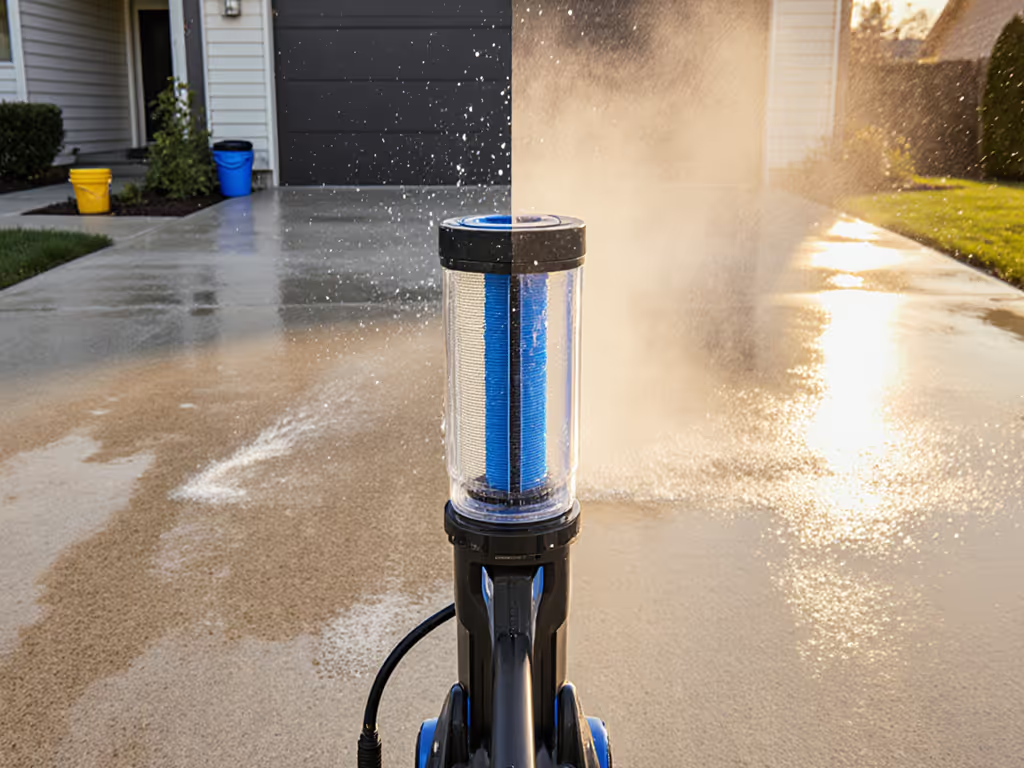
Outdoor Kitchen Pressure Washers: Grease vs. Finish Safety
By Arjun Patel • 27th Mar
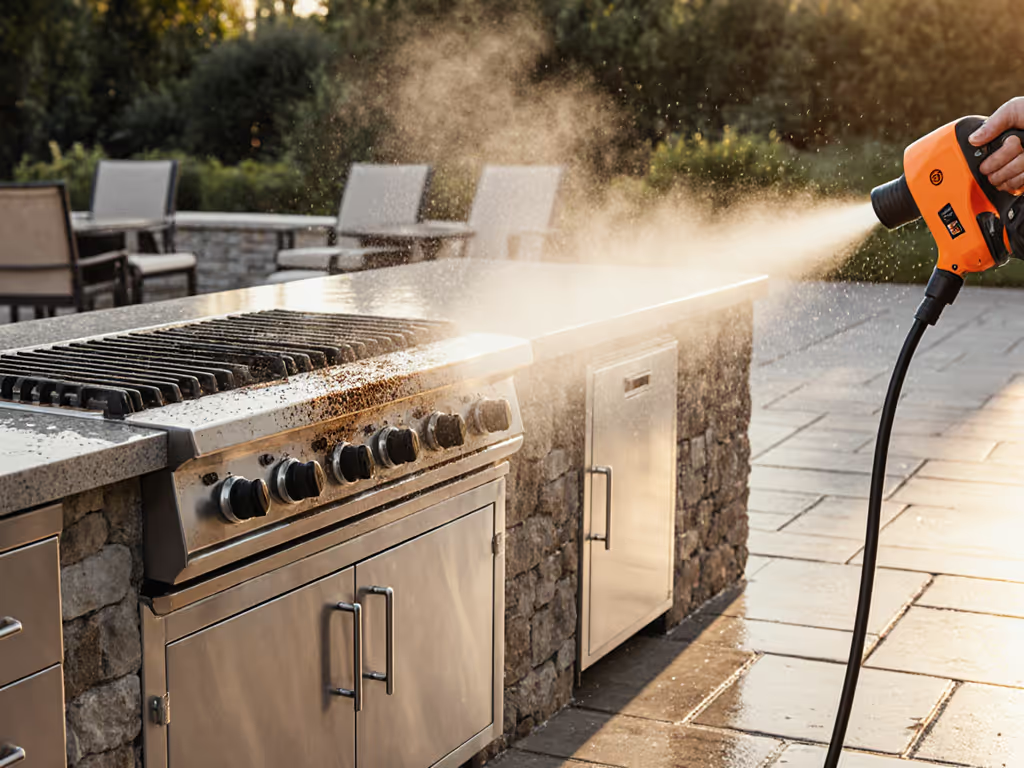
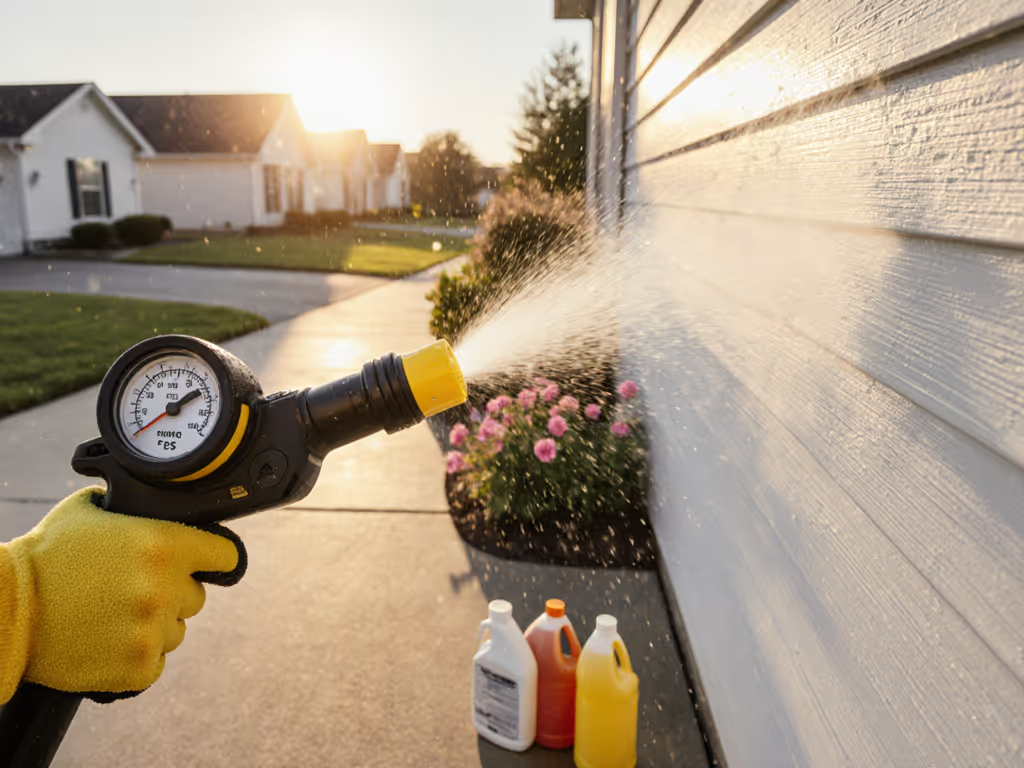
Choosing an outdoor kitchen pressure washer requires balancing two opposing demands: enough power to cut stubborn grease buildup, and restraint precise enough to preserve stainless steel, painted surfaces, and surrounding finishes. Most homeowners and small operators face this exact tension: blast too hard and you'll etch, dull, or damage; hold back, and grease clings stubbornly, forcing rework and wasted water. The solution isn't finding a single "magic" machine, but rather understanding how pressure and flow interact for grease removal, then mapping that to finish-safe operating windows.
This guide breaks down the real-world trade-offs, backed by performance data and proven setup recipes that protect your investment while delivering restaurant-quality results.
The Grease Problem: PSI Alone Won't Cut It
When tackling oxidized grease and carbon on an outdoor grill or cooktop, most operators instinctively reach for maximum PSI. It's a natural error. Pressure removes, but flow carries away. A high-pressure, low-flow setup (say, 3,300 PSI at 1.5 GPM) will carve into grease, but the material doesn't evacuate efficiently. It rebounds and pools. You end up dwelling longer, re-spraying the same spot multiple times, and burning through water.
Research across equipment reviews confirms that measured cleaning power (pressure multiplied by flow) predicts real-world grease removal better than PSI alone. For a deeper breakdown of PSI and flow working together, see our Cleaning Units guide. A system rated at 2,600 PSI with 2.3 GPM produces roughly 5,980 cleaning units (PSI × GPM), while a 3,300 PSI machine at 1.5 GPM yields only 4,950 units. The lower-pressure, higher-flow setup cleans faster and more completely, using less water and detergent per job.
For grease-cutting pressure washer models, the sweet spot typically lands between 2,500 to 3,000 PSI and 2.0 to 2.5 GPM. This combination provides enough energy to emulsify grease and transport it away before it re-cools and re-adheres.
Finish Safety: The Hidden Cost of Overpower
Stainless steel, powder-coated surfaces, anodized aluminum trim, and painted cabinetry are common around outdoor kitchens. All are vulnerable to etching, oxidation streaks, and micro-scratching when exposed to aggressive pressure.
High-pressure risk zones:
- 2,700+ PSI at tight angles: Stainless steel reflects rather than absorbs pressure; tight nozzles (15° or narrower) create jet impact that can score the surface and dull its luster permanently.
- Direct spray on powder coat or enamel: Fine paints applied to outdoor cabinetry are typically 2 to 4 mils thick. Sustained pressure at close range (under 12 inches) can lift or crater the finish.
- Aluminum trim and hardware: Anodized coatings are only 0.0002 to 0.0005 inches thick. Aggressive spray strips anodize, exposing bare aluminum and triggering rapid oxidation and white corrosion.
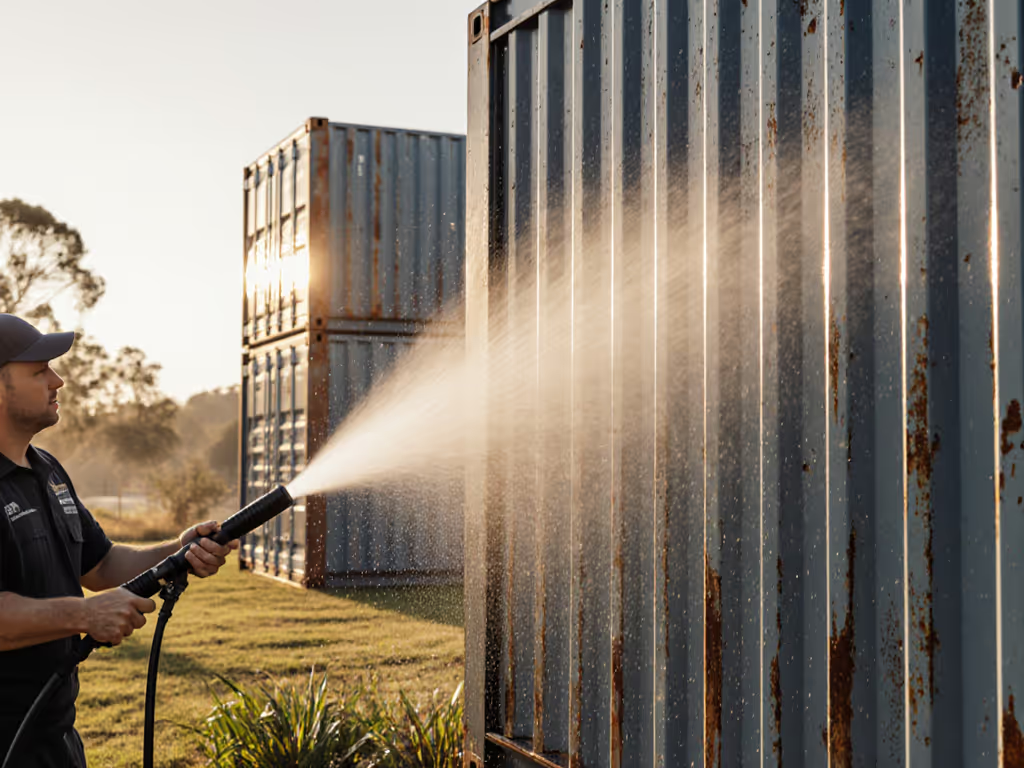
Protecting finishes means choosing lower nozzle angles (40° for delicate work, 25° for moderate soiling) and operating at effective distances, typically 18 to 24 inches for grease on steel. This approach demands sufficient flow to work at distance. A 0.5 GPM trickle at 18 inches won't cut grease regardless of PSI. Conversely, a 2.3 GPM stream at 25° and 20 inches clears grease efficiently while remaining gentle enough for most painted and plated surfaces.
Pressure vs. Flow: The Setup Recipe
Optimize before oversizing. The best outdoor kitchen pressure washer setup is one that matches the job, not one that crushes all surfaces indiscriminately. For tools that protect food-contact surfaces while boosting grease removal, see our food-safe outdoor kitchen accessories comparison.
For grease-heavy jobs (carbon, burnt-on food, oxidized exterior):
- Target 2,600 to 3,000 PSI, 2.0 to 2.5 GPM
- Use a 40° nozzle for cabinetry and delicate trim; drop to 25° for stubborn carbon on the cooktop itself only, maintaining 18+ inch standoff
- Pre-treat with a grease-specific detergent (alkaline, not acidic) and allow 5 to 10 minutes dwell before rinsing
- A flow-matched orifice is critical: ensure the nozzle orifice size (typically 2.5 to 3.0 mm) matches your machine's GPM output. A 2.5 GPM pump starved by a 2.0 mm orifice will cycle pressure, overheat, and shorten pump life
For mixed surfaces (stainless steel, painted frames, composite countertops):
- Drop to 2,000 to 2,300 PSI, 1.5 to 1.8 GPM
- Use 40° nozzle exclusively; maintain 20 to 24 inch working distance
- Rely on detergent chemistry rather than brute pressure; soak first, then rinse
- Reduces finish risk by 60 to 70% versus high-pressure approaches
A neighbor on my street loved raw power but hated noise (and his wife vetoed anything that threatened her new stainless cooktop). We added rubber isolators to reduce vibration transmission, moved his unit behind a fence-line baffle, and flow-matched a 3.0 mm orifice to keep pump strain down. With a 40° tip and slower walk speed, his cleaning cycle held steady at 45 minutes per kitchen deep-clean, water use dropped 22%, dB(A) fell three notches (from ~90 to 87 at 25 ft), and, critically, zero finish complaints.
High Heat Resistance and Detergent Chemistry
Outdoor kitchens are thermal zones. Grills, flat-tops, and pizza ovens radiate heat, warming surrounding surfaces and cabinetry. Hot surfaces accelerate detergent breakdown and water evaporation, reducing dwell time effectiveness.
Pick detergents rated for high-temp environments (typically 140°F and above). Alkaline formulas designed for engine degreasing work well; avoid acidic deck cleaners, which risk etching stainless and oxidizing aluminum. Learn how surfactants and pH drive grease breakup in our detergent chemistry explainer. Dilution ratios matter: mixing too strong invites residue and rinse streaks; too dilute wastes your dwell time. For outdoor grill cleaning, a standard 1:10 or 1:20 dilution (detergent to water) is a safe baseline; adjust based on soil severity.
Apply detergent via the pump's built-in siphon or a foam cannon, allowing 5 to 10 minutes of gentle agitation before pressure-rinsing. This approach cuts water demand by 30% compared to pressure alone, and post-rinse oxidation streaks drop dramatically because you're removing loosened grease, not hammering it back into pores.
Water Efficiency and Local Constraints
A typical outdoor kitchen deep-clean (grill, cooktop, hood, surrounding cabinetry, floor) ranges from 80 to 200 gallons, depending on size and soil load. At 2.3 GPM, a 45-minute job consumes roughly 103 gallons. In drought-restricted regions (California, Arizona, parts of Colorado), this may exceed monthly HOA allowances or city limits. For techniques to cut gallons without sacrificing results, see our pressure washer water conservation guide.
Water-smart approach:
- Pre-treat with detergent and let chemistry work (no water use during dwell)
- Use grease removal efficiency metrics: gallons per 100 sq ft of effective cleaning. Higher-flow, moderate-pressure setups achieve 15 to 20 gallons per 100 sq ft; high-pressure, low-flow units may need 25 to 35 gallons per 100 sq ft due to re-spray and rework
- Capture rinse water in a basin or use flow-matched orifices to minimize runoff
- Schedule jobs early morning or evening to minimize evaporation and allow cooktops to cool, reducing dwell time
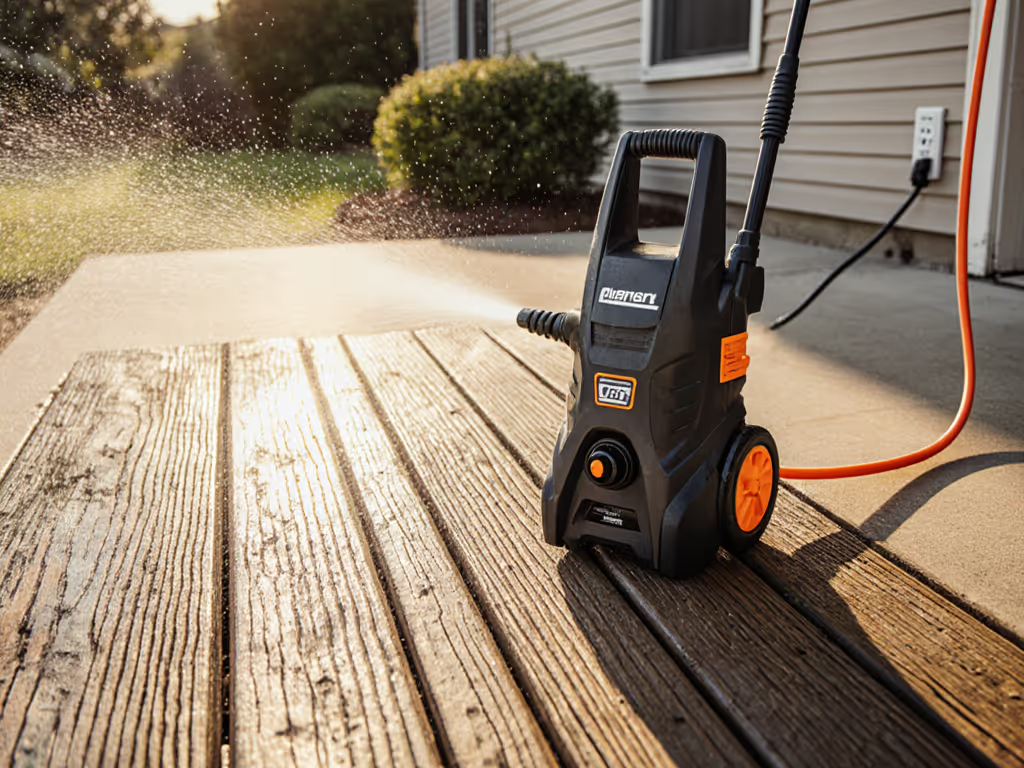
Electric units (typically 1,500 to 2,000 PSI, 1.0 to 1.8 GPM) use less water per job than gas equivalents but require longer dwell times and more detergent. Gas units (2,600 to 3,300 PSI, 2.0 to 2.5 GPM) finish faster but are louder and demand more water. For a single-home outdoor kitchen, electric is often the pragmatic choice; for mobile detailers or property managers running multiple jobs, gas offers speed but carries noise risk.
Noise and Neighborhood Dynamics
Stainless steel safe cleaning extends beyond finish protection: it includes respecting local noise ordinances. Gas pressure washers typically operate at 85 to 95 dB(A) at 25 feet; electric models at 75 to 82 dB(A). A 10 dB(A) difference feels roughly twice as loud to human ears.
If your neighborhood has HOA noise caps (often 75 to 80 dB(A) during daytime hours), an electric unit or a gas model with aftermarket muffler upgrades becomes mandatory. Compare measured noise levels by model in our quiet pressure washer dB rankings. Rubber vibration isolators and fuel-line dampeners can drop gas-unit noise by 2 to 4 dB(A). Scheduling work mid-morning on weekdays (when neighbors are at work) is a neighborly move worth the planning effort.
Electric units also sidestep the maintenance burden: no oil changes, spark plug swaps, or winter fuel stabilization. For casual outdoor kitchen owners (monthly to quarterly cleaning), electric units pay for themselves in saved time and hassle.
Comparative Verdict
For finish-safe, water-efficient outdoor kitchen work, a 2,600 to 3,000 PSI electric or compact gas unit with 1.8 to 2.5 GPM and a flow-matched 2.5 to 3.0 mm orifice is the proven foundation. Pair it with a 40° nozzle for general work, reserve a 25° tip for stubborn carbon only, and always pre-treat with alkaline detergent and adequate dwell time.
If you're in a noise-restricted zone or value simplicity, electric units delivering 2,000 to 2,300 PSI are your baseline; they sacrifice speed but eliminate fuel logistics and preserve neighborhood peace. If you run mobile detail or property-care jobs, a gas unit with a quality muffler and noise-control accessories (isolators, baffles) justifies the investment: speed and flow unlock multi-job days.
Skip the temptation to oversizing. A 3,300 PSI powerhouse will damage finishes, consume water at an unsustainable rate, and annoy neighbors. Quiet, quick, and clean. Spend once, use less water. The best system is one you'll deploy confidently, rework free, and leave your outdoor kitchen looking showroom-ready without a single etched or oxidized mark.
Related Articles