Drought-Safe Pressure Washer Water Recycling Compared
By Maya Okafor • 8th Dec
Understanding Your Water Conservation Challenge
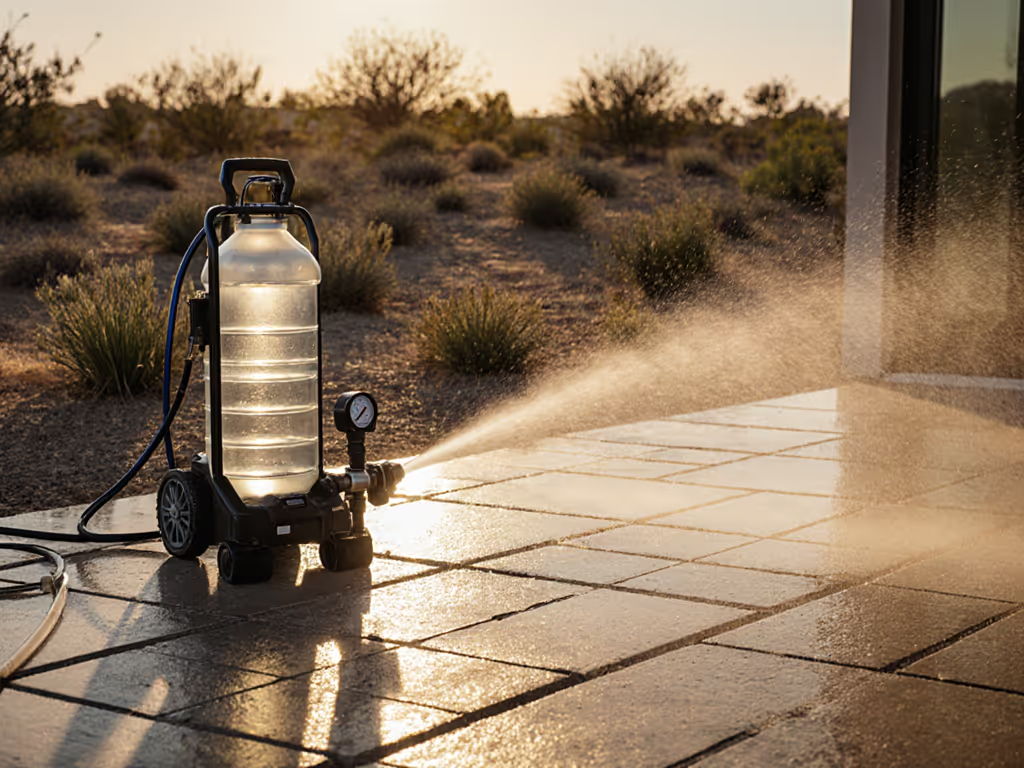
When you're facing strict drought restrictions while trying to maintain your home's exterior surfaces, pressure washer water reclamation becomes more than just an eco-friendly choice (it is often a legal necessity). For homeowners battling water constraints without compromising on surface protection, water recycling pressure washer systems offer a sophisticated solution that aligns perfectly with finish-safe cleaning principles. As someone who bridges detailing and pressure washing while minimizing contact and runoff, I understand how frustrating it can be to see beautiful patios, driveways, and painted surfaces marred by improper cleaning techniques, all while wasting precious water. Let's explore how modern water reclamation technology can help you achieve professional results while staying within your water budget.
Chemistry first, pressure last
Why Water Conservation Matters for Homeowners
What makes water reclamation essential for modern house pressure washing?
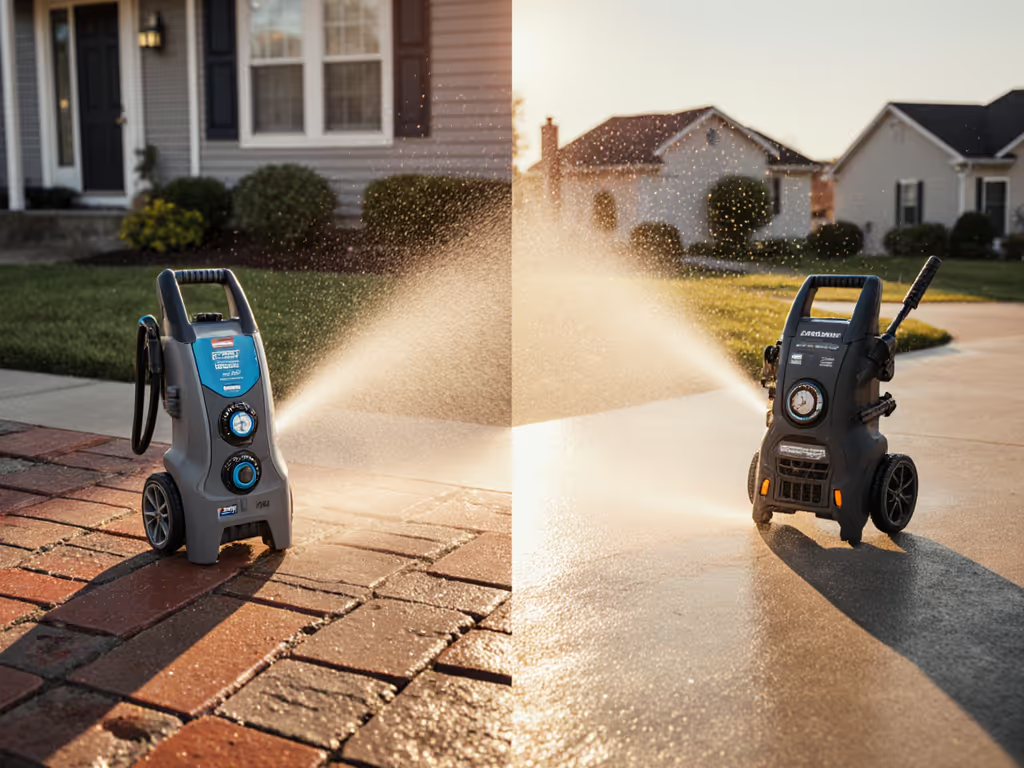
Recent EPA regulations in drought-prone states like California and Arizona now require residential pressure washers to capture and properly dispose of or recycle run-off water. Unlike commercial operators who lose 10-20% of water through evaporation during pressure cleaning, homeowners working with limited water resources can't afford this waste. Studies confirm that standard pressure washing can consume 4-8 gallons per minute, while drought-friendly cleaning systems can reduce this by up to 90% through closed-loop recycling. Use our gallons-per-job guide to estimate usage and savings before you start.
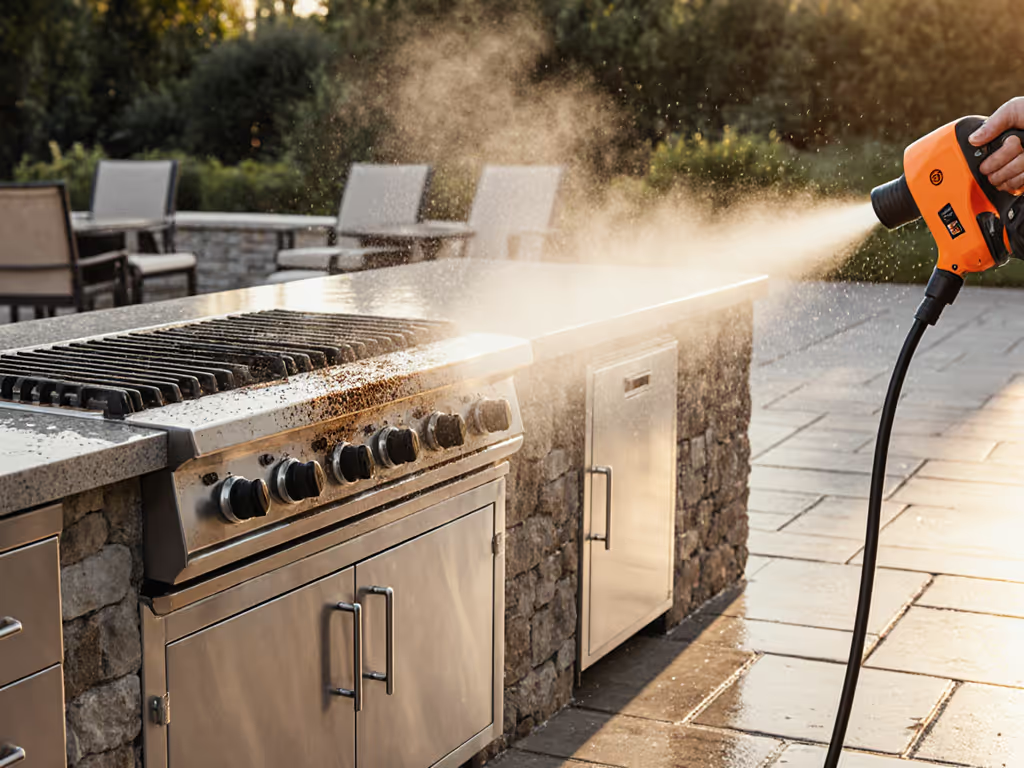
The environmental impact is not the only concern. Water restrictions directly affect your ability to maintain your property. Without proper water conservation systems, you might face fines for stormwater runoff that carries oil, grease, and cleaning chemicals into municipal systems. More importantly, improper water management often leads to the very surface damage you're trying to prevent: chalky streaks under rails, oxidized paint, and discolored trim.
How does water recycling actually work?
Water recycling systems operate on simple but effective principles:
- Collection: Reclaim mats or vacuum systems capture all run-off water
- Filtration: Multi-stage processes remove solids, oils, and contaminants
- Treatment: Technologies like chelation break down complex molecules
- Recycling: Cleaned water returns to the pressure washer supply
Unlike basic oil-water separators that only handle free-floating oils, true water recycling pressure washer systems employ multiple filtration stages (including 20-micron filtration, carbon filtration, and sometimes electrocoagulation) to ensure water quality safe for reuse. For hard water or sediment-prone sources, compare pressure washer water filtration systems to protect pumps and finishes during recycling. This is particularly crucial for finish-safe cleaning where contaminated water can redeposit grit and cause swirls or dulling on delicate surfaces. Clean water protects finishes and improves consistency.
System Comparison: Finding Your Perfect Match
What are the main types of water reclamation systems for residential use?
| System Type | Water Recovery Rate | Best For | Surface Safety Considerations |
|---|---|---|---|
| Vacuum Recovery | 80-90% | Small decks, patios, vehicles | Minimal contact; gentle on surfaces but requires careful positioning to avoid creating puddles that could damage wood |
| Reclaim Mats | 70-85% | Driveways, concrete surfaces | Allows wider nozzle fan angle operation without water spray affecting adjacent surfaces |
| Closed-Loop Mobile Units | 90-95% | Full-house pressure washing | Provides consistent water quality for foam pre-wash and extended dwell on painted surfaces |
Crucially, not all systems deliver the water purity needed for safe surface cleaning. Some reclaimed water still contains fine particulates that can act like sandpaper on painted surfaces. For homeowners focused on preserving finish integrity, look for systems offering at least triple-stage filtration that removes particles down to 20 microns. Water quality is the backbone of finish-safe results.
How does water quality in recycling systems impact surface safety?
This is where my expertise in oxidation control becomes critical. Poorly filtered recycled water often contains residual metals and minerals that accelerate oxidation on painted surfaces and metals. When I worked with a client who had persistent chalky streaks under aluminum rails (a classic oxidation issue), we discovered their reclaimed water contained trace metals that were redepositing on the surface during rinsing.
The solution? We implemented a mild chelating wash that binds to these metals, extended the dwell time to allow chemistry to work, and switched to a wider nozzle fan angle from a greater distance during rinsing. The result? Not just elimination of streaks, but an actual improvement in paint gloss readings after drying. This experience reinforced my belief that chemistry does the heavy lift; pressure just rinses smartly. It is a simple shift that pays off.
Practical Implementation Guide
What's the right system for your specific surfaces and water constraints?
For painted surfaces, trim, and coated metals:
- Prioritize systems with chelation capabilities to prevent metal redeposition
- Use 40-degree nozzle fan angles at minimum 24-inch standoff distance
- Implement foam pre-wash with mild detergents to reduce mechanical agitation
- Maintain PSI below 1,500 to prevent coating damage while maximizing runoff control
For concrete, brick, and stone surfaces:
- Higher PSI (up to 2,500) can be used safely with proper runoff management
- Consider closed-loop systems that can handle higher solids content
- Focus on water conservation through GPM optimization rather than PSI reduction Not sure how flow and pressure trade off? See our PSI vs GPM guide for surface-first specs.
For composite decks and sensitive wood surfaces:
- Strictly limit to 1,200 PSI maximum with wide-angle tips
- Essential: Extended dwell time with enzymatic cleaners
- Critical runoff control to prevent water penetration at joints
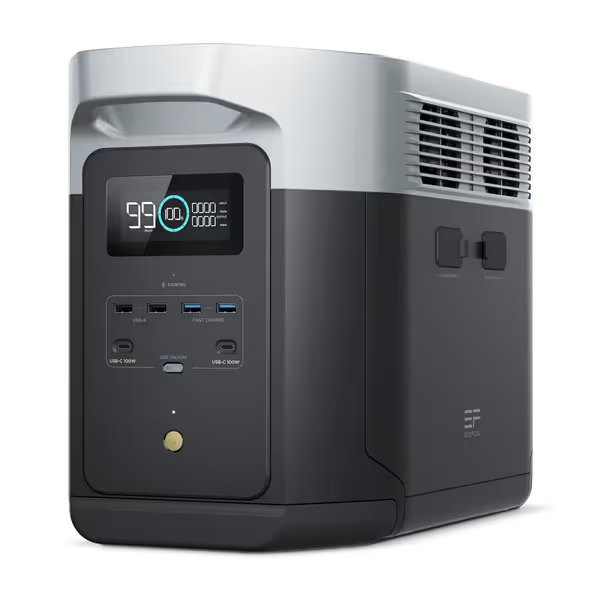
ECOFLOW DELTA 2 Max Portable Power Station
Rapidly power 99% of home devices with long-lasting, expandable, quiet energy.
$849
Full Charge Time (80%)43 Mins (AC + Solar)
Full Charge Time (80%)43 Mins (AC + Solar)
Pros
Unmatched 43-min 80% charge (AC+Solar) ensures power never runs out.
3000-cycle LFP battery offers 10 years of reliable, cost-efficient power.
Cons
Solar panel is optional, increasing initial cost for off-grid users.
Customers find this power station to be a high-quality generator that works well, particularly for helping with power outages and camping needs. The device charges quickly, reaching 95% within 45 minutes, and customers appreciate its ease of setup and operation. The battery life is impressive, keeping appliances running for up to 29 hours, and it provides sufficient power for refrigerators and air conditioners. Customers consider it worth the price, with one noting it saves on gas generator maintenance costs.
Customers find this power station to be a high-quality generator that works well, particularly for helping with power outages and camping needs. The device charges quickly, reaching 95% within 45 minutes, and customers appreciate its ease of setup and operation. The battery life is impressive, keeping appliances running for up to 29 hours, and it provides sufficient power for refrigerators and air conditioners. Customers consider it worth the price, with one noting it saves on gas generator maintenance costs.
How to integrate water reclamation with finish-safe cleaning techniques
The most successful drought-friendly cleaning approaches combine water conservation with surface protection:
- Pre-rinse strategy: Use minimal water for initial rinse, focusing on downward flow to prevent water intrusion
- Foam pre-wash application: Apply chelating detergent with foam cannon at low PSI (500-800)
- Controlled dwell time: Allow 3-5 minutes for chemistry to work (critical for oxidation control)
- Gentle agitation: Use soft brushes only where absolutely necessary
- Smart rinsing: Wider nozzle fan angle (40°+) from farther distance (24-36") with reduced PSI
This methodical approach ensures contact minimization while maintaining cleaning effectiveness, precisely what homeowners need when working within strict water budgets. The key is understanding that lower water volume doesn't mean sacrificing results; it means working smarter with chemistry and technique. Small adjustments make a big difference.
Moving Forward with Confidence
Can solar power enhance your water reclamation system?
For homeowners seeking truly drought-friendly cleaning, pairing your water reclamation system with solar power creates a complete sustainable solution. The EF ECOFLOW Portable Power Station DELTA 2 Max offers a quiet, emission-free power source for electric pressure washers that maintain optimal PSI control for delicate surfaces. Unlike noisy gas units that can disturb neighbors, solar-powered systems operate at just 30 dB (perfect for early morning or evening cleaning within noise ordinances). If noise is a concern, compare the quietest models in our dB-ranked pressure washer list.
With expandable capacity up to 6kWh, this system can power multiple cleaning sessions without grid connection, making it ideal for mobile detailers and homeowners in areas with frequent power outages. Most importantly, the precise power control of electric systems allows for consistent low-PSI operation that protects coatings while maximizing water efficiency. Reliable power equals reliable results.
Your Next Steps Toward Drought-Safe Cleaning
You don't need to choose between water conservation and surface protection. The latest water recycling pressure washer technology, when combined with proper finish-safe techniques, delivers both. Start with these practical steps:
- Assess your water needs: Calculate square footage of surfaces to clean and local water restrictions
- Match system to surfaces: Prioritize water quality for painted surfaces, capacity for large concrete areas
- Implement chemistry-first approach: Focus on extended dwell times with appropriate cleaners
- Practice runoff control: Position yourself to direct water toward collection points
- Monitor surface results: Use gloss meters or simple visual checks to verify no damage occurs
Remember that drought-friendly cleaning isn't just about using less water, it is about using water more intelligently. By embracing closed-loop cleaning systems and finish-protective techniques, you'll not only comply with regulations but also extend the life of your home's surfaces while conserving a precious resource.
For those ready to dive deeper into matching specific water reclamation systems to your surfaces and water constraints, I've compiled a detailed comparison chart of top residential systems with PSI/GPM recommendations for various surfaces (available exclusively to readers who complete our 2-minute Surface Safety Assessment).
Related Articles