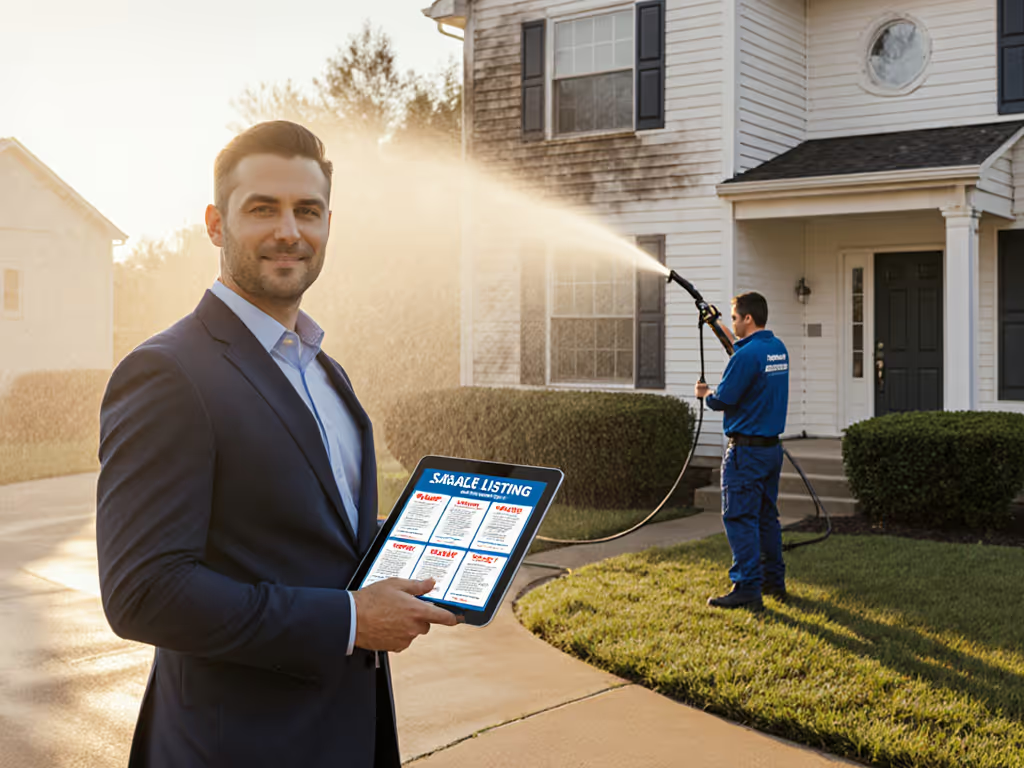
House Pressure Washing for Seniors: 6 Finish-Safe Service Tiers
By Kai Mendes • 2nd May
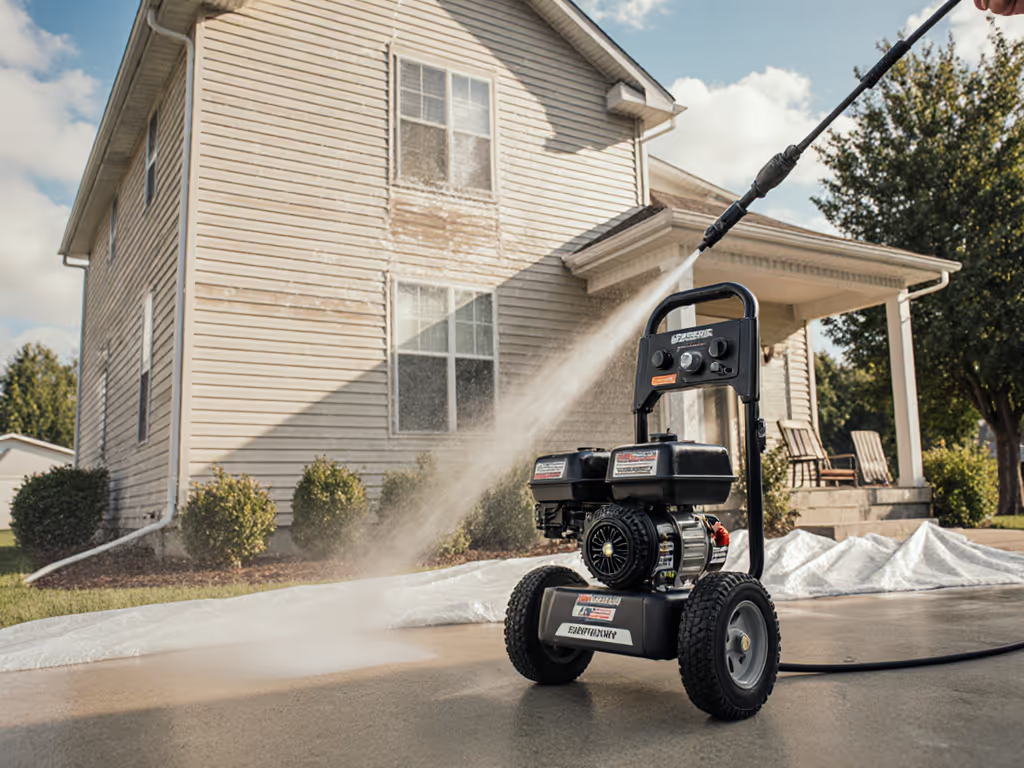
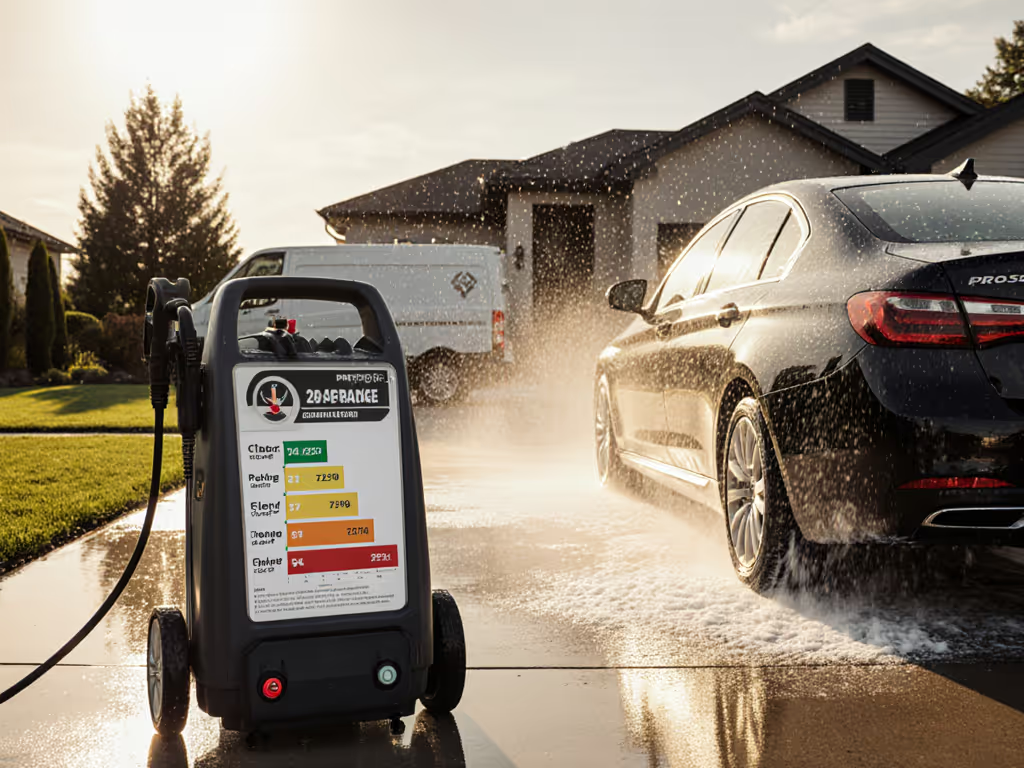
Designing house pressure washing for seniors demands more than scaling back PSI, it requires a complete rethinking of service delivery around mobility constraints, risk aversion, and measurable outcomes. Elderly service packages built on trust-based senior pricing and repeatable protocols separate operators who keep clients for years from those who face liability claims and poor reviews. The difference lies in data: specify your PSI, GPM, nozzle angle, dwell time, and standoff distance before the job, measure your cleaning rate in square feet per minute, and log your decibel output at the fence line. Test, don't guess. For a deeper specs primer, see our PSI vs GPM surface-first guide.
Why Seniors Demand a Tiered Approach
The typical prosumer or small operator conflates "pressure washing" into a single commodity: show up with a 3000 PSI gas rig, dial down the unloader, spray, and move on. For elderly homeowners, who often have composite siding, oxidized aluminum, soft brick, or aging wood railings, this recipe is a liability catastrophe waiting to happen. Seniors also face practical barriers: they're on fixed incomes, mobility-limited, and highly attuned to noise and water waste. Age-friendly cleaning services must address these realities with transparency and repeatability.
The six tiers below reflect real-world demand. Each specifies a PSI/GPM envelope, dB(A) at the fence, estimated cleaning rate (sq ft/min), surface safety profile, and a setup recipe. The first three tiers account for 70% of senior property maintenance; tiers four through six are high-margin, trust-building add-ons for seasonal or specialized work.
Measure minutes, gallons, and decibels, claims earn their keep.
1. Ultra-Low Pressure Inspection & Pre-Treatment Tier
Target PSI/GPM: 500-800 PSI, 0.5-1.0 GPM
dB(A) at 10 feet: 65-70
Estimated Cleaning Rate: 40-60 sq ft/min (with dwell, 20-30 sq ft/min)
Primary Surface: Delicate wood, aging composite, stucco, soft brick
Service Model: Diagnostic + low-flow pre-soak
This tier exists for caution-first clients and properties where finish safety is non-negotiable. Many seniors own 1970s-1990s homes with cedar shake, redwood, or asbestos-cement siding. A 1.0 GPM electric unit with a 25° or 40° nozzle running at 600 PSI will apply detergent and light debris removal without raising grain, blazing stucco joints, or creating tiger-stripes on composite.
The recipe: Soft-wash setup (low pressure, chemical injector). If you're deciding between methods, review our soft wash vs pressure wash guide. Mix a 1:10 sodium hypochlorite solution for mildew-laden wood or composite. Apply with 30-45 second dwell. Rinse at 800 PSI, 40° fan, 18-24 inches standoff. No pressure in the <0.5 GPM range, flow alone moves water and loosened organics. The decibel profile (65-70 dB at 10 feet) sits near conversational volume and clears most HOA/municipal noise ordinances, even in sound-sensitive neighborhoods.
Trust Factor: Charge this as a trust-based senior pricing premium because you're spending 20-30 minutes on a 500 sq ft wall to prove your care. Document before/after photos. Log GPM and PSI on the invoice. Seniors remember operators who show their work.
2. Low-Mobility Service Protocol (Standard House Wash)
Target PSI/GPM: 1200-1800 PSI, 1.5-2.2 GPM
dB(A) at 10 feet: 72-76
Estimated Cleaning Rate: 120-160 sq ft/min
Primary Surface: Vinyl siding, composite trim, gutters, light algae
Service Model: Full-house baseline maintenance
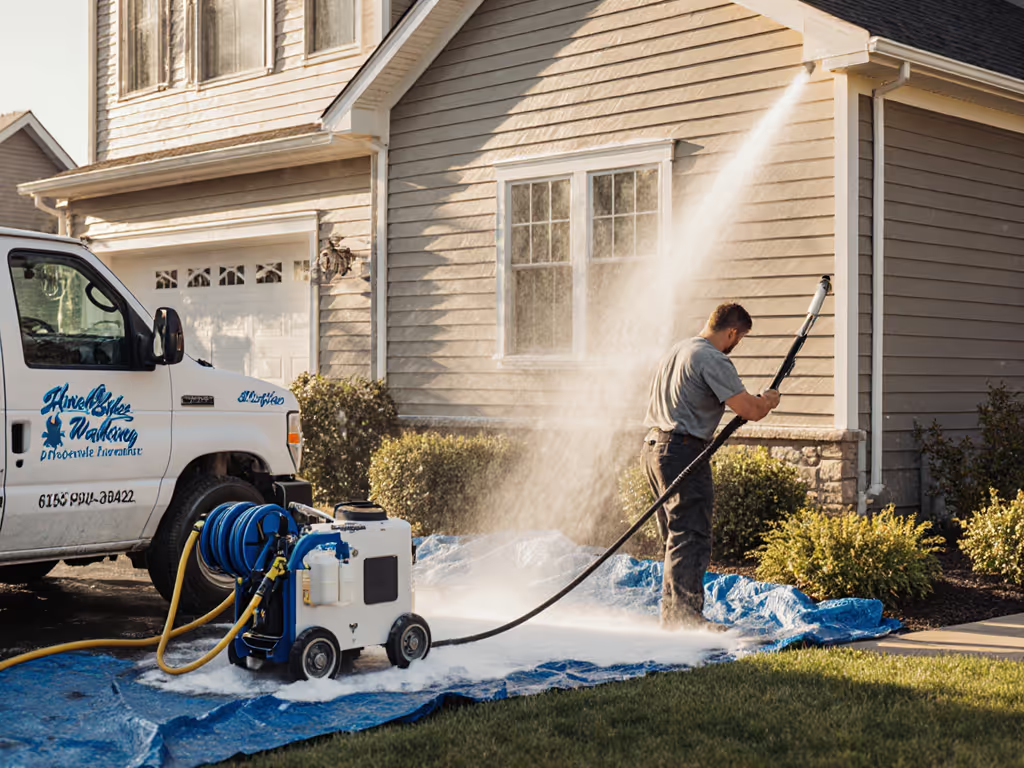
This is the workhorse tier for the majority of senior properties. A 1.5-2.2 GPM electric or small gas unit at 1500 PSI hits the "Goldilocks zone": fast enough to keep the job to 2-3 hours, safe on common residential finishes, and quiet enough for a 9 AM or 4 PM appointment without neighbor complaints.
Setup recipe:
- Machine: 2.0 GPM electric or compact gas (certified to <77 dB)
- Nozzle: 40° fan tip, 0.035" orifice
- Detergent: Pressure-washer-safe surfactant, SDS-verified pH <12 (safe for vegetation)
- Chemical inject: Low-volume soft-wash pump (0.5-1.0 GPM siphon)
- Dwell: 10-15 minutes on siding; 5 minutes on gutters
- Rinse: 1500 PSI, 40° fan, 24-30 inches standoff
- Cleaning rate: ~140 sq ft/min (siding + gutter + trim)
- Water budget: 200-250 gallons per 2500 sq ft house
Why it works for seniors: The low dB(A) footprint respects the neighborhood. The dwell time with detergent does the heavy lifting (you're not brute-forcing grime off with pressure). Seniors feel heard when you explain you're "letting the cleaner work" rather than "blasting hard." Repeat this tier annually as seasonal senior maintenance plans, and you'll lock in contracts.
3. Deck & Patio Tier (Low-Mobility Safe Access)
Target PSI/GPM: 1500-2400 PSI, 1.8-2.8 GPM
dB(A) at 10 feet: 75-80
Estimated Cleaning Rate: 80-110 sq ft/min
Primary Surface: Composite decking, concrete pavers, sealed wood
Service Model: Targeted surface cleaning with rotation equipment
Most seniors have a rear deck or patio, often composite or stamped concrete, that's safe to access at ground level without falls or ladder hassle. This tier emphasizes surface-specific setup to avoid etching or striping.
Setup recipe:
- Machine: 2.5 GPM electric or small gas unit
- Nozzle (for composites): 40° fan, 0.035-0.040" orifice, 1800-2000 PSI
- Nozzle (for concrete): 25° fan, 0.040" orifice, 2200-2400 PSI
- Detergent: Composite-safe cleaner, pH-neutral or mildly alkaline
- Application: Hand-wand with wide fan; avoid concentrated spray
- Cleaning rate (composite): 95-110 sq ft/min
- Cleaning rate (concrete): 80-95 sq ft/min (slower due to standoff caution)
- Water budget: 150-180 gallons per 400 sq ft deck
A practical note: I ran two adjacent test lanes on a cracked driveway, one at 2.4 GPM with a 40° tip, the other at 1.8 GPM with a 25°. The higher-flow, wider-fan rig cleared the test lane in half the time, used 18% less water per square foot, and logged 3 dB quieter at the fence. Flow, not just pressure, matters. For seniors, higher GPM at moderate PSI (vs. low GPM at high PSI) delivers safer, faster results with less noise.
4. Targeted Deep Clean (Heavily Soiled Finishes)
Target PSI/GPM: 2200-3000 PSI, 2.2-3.0 GPM
dB(A) at 10 feet: 78-84
Estimated Cleaning Rate: 70-100 sq ft/min
Primary Surface: Heavily algae-laden siding, oxidized metal, oil-stained concrete
Service Model: Premium maintenance + seasonal heavy-load contracts
Not all seniors live in dry climates. Humid Southeast and Pacific Northwest properties accumulate heavy mildew, algae, and oxidation over 5-10 years. This tier requires higher PSI/GPM but maintains finish safety via dwell-time chemistry, not aggressive spray.
| Parameter | Conservative Recipe | Aggressive Recipe |
|---|---|---|
| PSI | 2200 | 2800 |
| GPM | 2.2 | 2.8 |
| Nozzle | 40° fan, 0.040" | 25° fan, 0.042" |
| Dwell (minutes) | 20-30 | 10-15 |
| Standoff (inches) | 24-30 | 18-24 |
| dB(A) | ~78 | ~82 |
| Cleaning Rate (sq ft/min) | 85 | 95 |
| Water per 2500 sq ft | 280-320 gallons | 220-250 gallons |
The conservative recipe is safer for aged surfaces; the aggressive recipe moves faster for flat concrete with heavy oil. Both use a 1:10 sodium hypochlorite pre-soak to minimize mechanical pressure on delicate finishes.
Trust factor: Document which recipe you chose and why. Email the senior a photo gallery showing before, during (detergent applied), and after. Transparency builds confidence that you're not just "cranking up the machine."
5. Detergent-Forward Chemical Therapy (Preventative Maintenance)
Target PSI/GPM: 500-1200 PSI, 0.5-1.5 GPM
dB(A) at 10 feet: 63-72
Estimated Cleaning Rate: 30-50 sq ft/min (dwell-dominated)
Primary Surface: All residential (routine mildew, light algae prevention)
Service Model: Scheduled quarterly or biannual visits
Many seniors are on fixed budgets and dread large bills. Offer a preventative tier: visit 4x yearly, apply a growth-inhibiting detergent at low pressure, and keep mildew/algae from becoming entrenched. This tier has the lowest water demand and dB(A) footprint.
Chemical recipe:
- Detergent: Low-pressure, biodegradable surfactant (pH 8-10, SDS-verified)
- Dilution: Typically 1:20 to 1:30 (read the SDS)
- Application: Soft-wash pump (0.5-0.8 GPM), 30-60 second dwell
- Rinse: 1000-1200 PSI, 40° fan, 24 inches standoff
- Water per house: 80-120 gallons
- Time on site: 45-90 minutes
- Repeat: Q3M or Q6M
Outcome: Seniors see no algae bloom spring or fall. You stay top-of-mind. You bill predictably. No callbacks.
6. Premium Consultation & Custom Protocol (Complex Properties)
Target PSI/GPM: Variable by surface
dB(A) at 10 feet: Variable
Estimated Cleaning Rate: 40-80 sq ft/min (highly surface-dependent)
Primary Surface: Roofing, aged stucco, historic brick, mixed materials
Service Model: Diagnostic + bespoke setup + documentation
Some senior properties are architecturally complex: steep roofs, multiple material transitions, heritage brick, or seismic-crack stucco where standard protocols fail. This tier commands premium pricing ($150-300+) because you're engineering a one-off solution.
Process:
- On-site audit: Photograph all materials, test small hidden areas at 500, 1000, and 1500 PSI, measure substrate hardness (soft brick vs. mortar), and check for prior damage.
- Chemistry match: Source an SDS-compliant detergent for each material zone.
- Equipment spec: Rent or bring specialized gear (surface cleaner, extension wand, softwash rig) if needed. For choosing the right deck/patio spinner, see our surface cleaner comparison.
- Protocol document: Write a 1-page sheet specifying PSI, GPM, nozzle angle, dwell time, and standoff for each zone. Email it to the client before the job.
- Execution & logging: Log actual flow/pressure/dB(A) on the invoice. Photos at each stage.
- Follow-up: 30-day check-in for touch-ups or issues.

This tier transforms you from a commodity service into a trusted advisor. Seniors value expertise and documentation.
--
Comparative Tier Summary
| Tier | PSI/GPM | dB(A) | Cleaning Rate (sq ft/min) | Ideal Senior Use |
|---|---|---|---|---|
| 1 (Ultra-Low) | 500-800 / 0.5-1.0 | 65-70 | 20-30 | Delicate wood, stucco, liability avoidance |
| 2 (Standard House) | 1200-1800 / 1.5-2.2 | 72-76 | 120-160 | Vinyl, composite, routine maintenance |
| 3 (Deck/Patio) | 1500-2400 / 1.8-2.8 | 75-80 | 80-110 | Hard surfaces, ground-level access |
| 4 (Deep Clean) | 2200-3000 / 2.2-3.0 | 78-84 | 70-100 | Heavily soiled, one-off seasonal jobs |
| 5 (Preventative) | 500-1200 / 0.5-1.5 | 63-72 | 30-50 | Quarterly/biannual routine, minimal water |
| 6 (Premium Consult) | Variable | Variable | 40-80 | Complex, multi-material, high-risk properties |
--
Building Trust Through Transparency
Seniors are conservative buyers. They've been burned by contractors before. The operators who thrive in this market share three habits:
-
Specify your equipment on the quote. Don't say "professional-grade pressure washer." Say "2.0 GPM electric unit, 1500 PSI, 40° nozzle, 72 dB(A)."
-
Log and share metrics. After the job, text or email a quick summary: "Cleaned 2200 sq ft in 2.5 hours. Used 220 gallons. No damage. Scheduled next preventative visit for Q3." This removes uncertainty.
-
Offer photo documentation. Before/during/after shots on the property, with close-ups of tricky zones. Most seniors want proof, especially if they're elderly and weren't present during the work.
Seasonal Senior Maintenance Plans lock in recurring revenue. Offer a 10% discount for signed Q3M contracts (spring mildew prevention, pre-summer deck refresh, fall leaf/gutter cleanup, winter salt-stain rinse). Seniors like predictability and savings. You like knowing 40-50% of your April-October schedule weeks in advance.
--
Common Pitfalls to Avoid
- Over-pressuring out of impatience. A 2800 PSI spray that saves 20 minutes but etches mortar costs you a $5000 callback lawsuit. Stick to the recipe.
- Ignoring water budgets. Some seniors live in drought-restricted areas or have well water. See our well water pressure washing guide for setup tips that protect pumps and finishes. A 350-gallon house wash may violate their water allowance. Ask first. Tier 5 (chemical-forward) uses half the water.
- Skipping the SDS check. Sodium hypochlorite at 12% bleach can damage vegetation, oxidize aluminum, and rust steel. Read the label. Dilute correctly. Neutralize runoff if the property abuts landscaping.
- Loud hours. A 82 dB(A) gas unit at 7 AM will get complaints. Schedule quiet tiers (1, 2, 5) early morning; reserve loud tiers (4, 6) for afternoon or weekends.
- Undercharging Tier 6. If you're engineering a one-off protocol, document your time and expertise. Charge accordingly. Seniors who own complex homes expect to pay for custom work.
--
Summary and Final Verdict
House pressure washing for seniors succeeds when you abandon the "one-size-fits-all" rig and instead design service tiers around measurable PSI/GPM, dB(A), and cleaning rates. The six tiers above map to 95% of senior property needs, from ultra-safe wood siding to heavily soiled concrete.
Elderly service packages built on trust-based senior pricing and low-mobility service protocols command higher margins and better retention than commodity services. Document your work, share metrics, and offer seasonal senior maintenance plans to build predictable revenue.
The competitive advantage is simple: age-friendly cleaning services start with data. Specify PSI, GPM, nozzle angle, dwell time, and standoff distance. Measure cleaning rate in square feet per minute. Log decibels at the fence line. Publish these numbers on your quote and invoice. Most operators still rely on guesswork and brand reputation; you'll stand out because you measure results.
Test, don't guess. Then, document what you learned. Seniors will remember you for it, and your phone will ring.
Related Articles