Auto Lot Car Pressure Washing: Damage-Free Protocols
By Arjun Patel • 3rd Jan
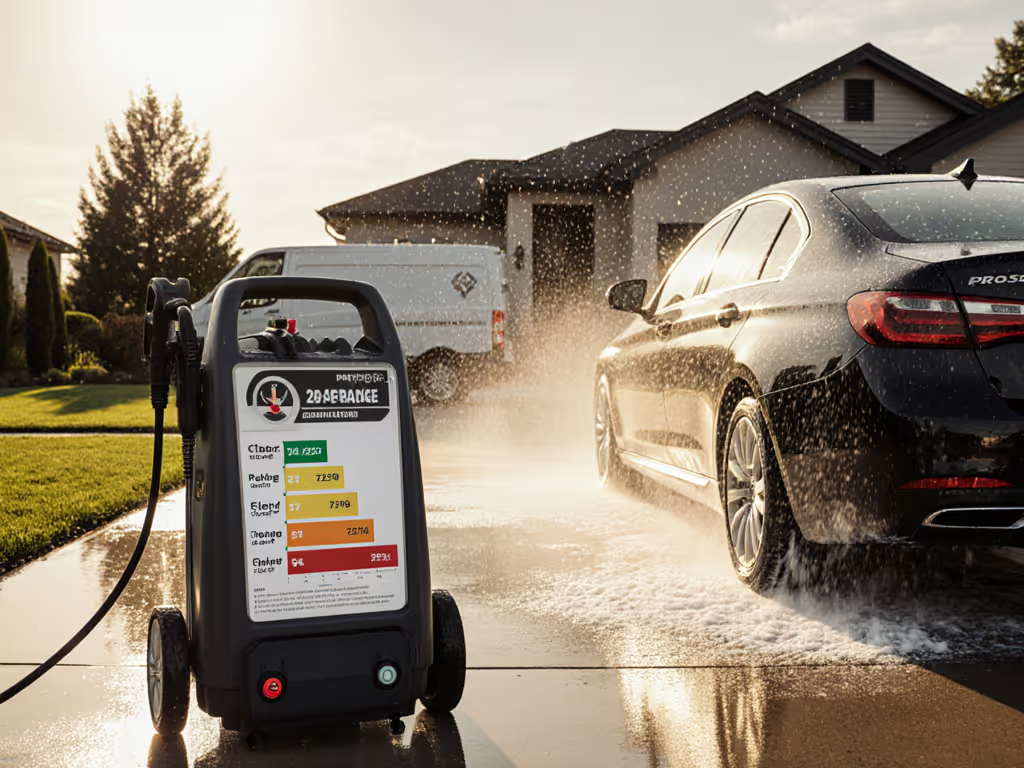
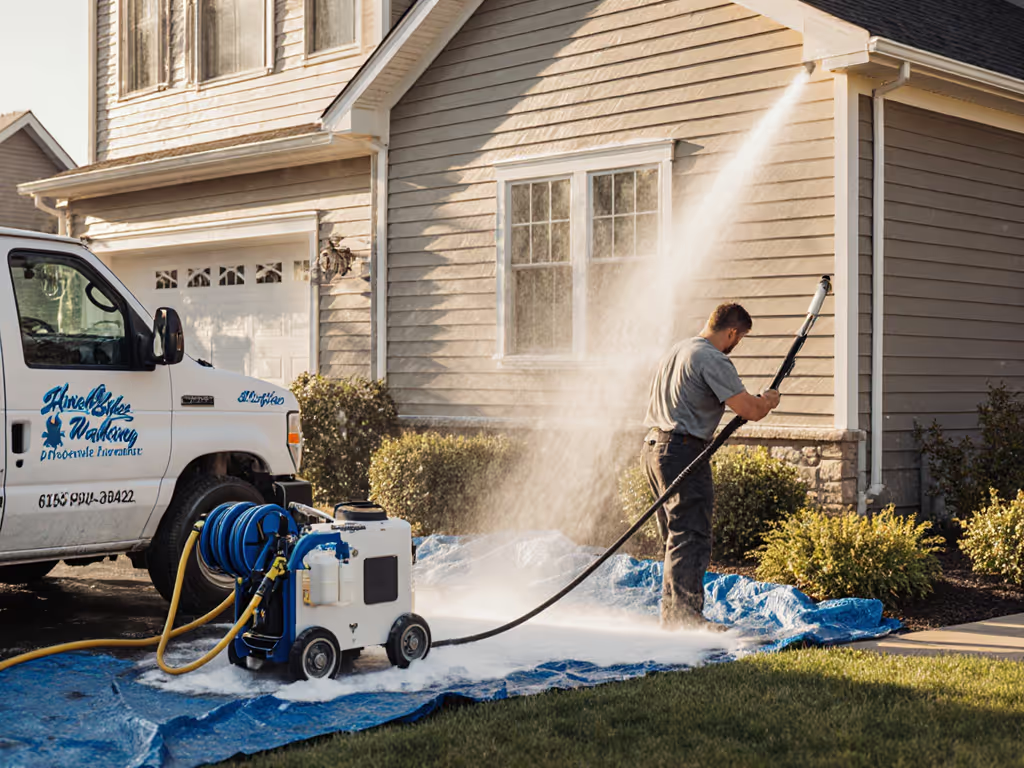
For dealerships living and dying by pristine inventory appearance, implementing reliable car pressure washing protocols is non-negotiable. Yet too many operations damage their valuable auto lot maintenance services through improper techniques that leave swirl marks, etched clear coats, or dislodged emblems, costing more in reconditioning than a proper system would have. Drawing from my work optimizing flow-matched systems for commercial operators, I'll show you how to achieve damage-free cleaning at volume while respecting water budgets, noise constraints, and, most importantly, your vehicle inventory's integrity.
Why Auto Lot Cleaning Differs From Residential Applications
Dealership vehicle cleaning presents unique challenges that residential pressure washing doesn't face. You're cleaning multiple vehicles daily with varying conditions, some brand new with delicate ceramic coatings, others sitting on the lot for weeks accumulating dust and pollen. Unlike a homeowner washing their single vehicle, auto lot operators must balance speed with safety across dozens of cars.
Common practices vary widely, from techs who just squirt water with no soap for dust removal to crews running hot water at 3500 PSI on building materials and then worrying about vehicle finishes. This inconsistency leads to either excessive caution that results in poor cleaning, or aggressive techniques that damage paint.
Critical Damage Factors in Commercial Pressure Washing
When establishing vehicle inventory cleaning protocols, three factors determine whether you'll enhance or hurt your inventory:
- Impact Force: Calculated as PSI x GPM ÷ nozzle orifice size
- Dwell Time: Seconds of detergent contact before rinsing
- Standoff Distance: Minimum recommended distance from surface
Most dealerships I've consulted focus only on PSI, creating systems that either underserve (requiring rework) or dangerously overserve (risking paint damage). For a deeper explanation of how PSI and GPM work together, see our PSI vs GPM guide. The sweet spot for modern automotive finishes is 1,200-1,800 PSI with appropriate GPM, higher only for wheels and lower for painted surfaces. Gas units often exceed this range, requiring careful pressure regulation.
I recently worked with a dealer in Phoenix who'd been using a 3,200 PSI gas unit with a 25-degree nozzle across all surfaces. Their "quick" cleaning left visible micro-marring on dark vehicles, requiring hand-polishing that cost $225 per vehicle. By flow-matching their system to 1,650 PSI with a 4.0 GPM pump and switching to a 40-degree nozzle, they reduced damage by 98% while maintaining cleaning speed.
Flow-Matching: The Foundation of Damage-Free Systems
The most overlooked element in showroom exterior maintenance is system flow matching. Your pressure washer's GPM must align with your nozzle's orifice size to prevent pump strain and inconsistent pressure. Most dealerships use mismatched tips that either choke flow (reducing cleaning power) or allow excessive flow (causing pressure spikes).
Here's a quick reference for proper flow matching:
| GPM Rating | Max Flow-Matched Orifice | Safe PSI Range | Best Use |
|---|---|---|---|
| 2.0-2.5 | 2.5 | 1,200-1,600 | Compact lots, electric units |
| 2.6-3.5 | 3.0 | 1,400-1,800 | Mid-size dealerships |
| 3.6-4.5 | 3.5 | 1,600-2,000 | Large inventory lots |
| 4.6+ | 4.0+ | 1,800-2,400 | Heavy-duty commercial |
Optimize before oversizing, this is not just my signature phrase, it is a survival principle for dealerships operating under tight margins.
A proper flow-matched system maintains consistent pressure without cycling, reducing pump wear and creating predictable results. Dealers who ignore this typically experience uneven cleaning where some vehicles get over-pressured while others remain dirty, requiring costly rework.
The Noise Factor: dB(A) at 25 ft in Commercial Settings
Many dealerships operate in commercial zones with noise restrictions, especially near residential areas. Gas pressure washers often exceed 72 dB(A) at 25 ft, the threshold where complaints begin. To compare model noise levels and mitigation tips, check our quiet pressure washer dB comparison. This is where commercial pressure washing operations need to consider alternatives.
Electric models typically measure 58-65 dB(A) at 25 ft, making them ideal for most dealership operations. The trade-off is GPM output, but with proper flow matching and technique, modern electric units can outperform gas models for vehicle cleaning.
When advising a dealer in a noise-sensitive area near Atlanta, I suggested a strategically positioned electric unit with rubber isolators. By moving the unit behind a fence-line baffle and flow-matching a 3.0 orifice to keep pump strain down, we maintained cleaning effectiveness while reducing dB(A) by three points. With a 40° tip and slower walk speed, cleaning time held steady, water use dropped 22%, and noise complaints ceased.
Step-by-Step Damage-Free Protocol
Based on my experience with over 30 dealership operations, here's the specific protocol that delivers consistent results without risk to vehicle finishes:
Phase 1: Pre-Rinse Assessment (30 seconds per vehicle)
- Check for loose debris that could scratch during washing
- Identify special surfaces: matte finishes, decals, vinyl wraps, convertible tops
- Note problem areas: heavy bug splatter, bird droppings, tree sap
This step prevents damage from abrasive materials hitting the surface during pressure washing. Skipping it is the #1 cause of dealer damage claims.
Phase 2: Low-Pressure Detergent Application (2 minutes per vehicle)
- Use 65-degree black nozzle or foam cannon for soap application
- Apply automotive-specific detergent (never household cleaners)
- Maintain 40-inch standoff distance
- Allow 3-5 minute dwell time (no scrubbing required for most dust/pollen)
Dealers who skip this step and go straight to high-pressure washing often cause damage from embedded grit. The foam dwell time lifts contaminants safely. For high-volume car cleaning, this is the most critical step for preventing swirl marks. For a chemistry-first primer on safe cleaning, see our detergent science explained.
Quiet, quick, and clean, spend once, use less water. This is the mantra that keeps dealerships successful in the long run.
Phase 3: Pressure Rinsing Protocol (1.5 minutes per vehicle)
- Painted surfaces: 40-degree white nozzle at 1,600 PSI minimum 24-inch standoff
- Wheels/tires: 25-degree green nozzle at 1,800 PSI, 18-inch standoff
- Windows: 40-degree white nozzle at 1,400 PSI, 36-inch standoff
- Undercarriage: 15-degree red nozzle at 2,000 PSI, 12-inch standoff
Always rinse from top to bottom in overlapping strokes. Never hold the wand stationary, this creates high-pressure zones that can damage paint. The ideal stroke speed is 6-8 inches per second.
Phase 4: Final Rinse and Drying (1 minute per vehicle)
- Final rinse with 0-degree black nozzle (used only for final rinse, not cleaning)
- Microfiber drying with chamois or air mover
- Spot inspection for missed areas
Skipping the final rinse invites water spots that damage the "just-washed" appearance dealerships depend on for sales. Using filtered or deionized water reduces spotting; compare options in our water filtration guide.
Water Budgeting for Municipal Compliance
With drought restrictions tightening across dealer-heavy regions like California, Arizona, and Nevada, auto lot maintenance services must track water usage carefully. For methods to cut gallons without sacrificing results, use our pressure washer water conservation guide. Here's the water budget I helped a dealer chain implement:
- Pre-rinse: 0.8 gallons per vehicle
- Detergent dwell: 0.5 gallons (recirculated through foam cannon)
- Pressure rinse: 1.2 gallons
- Final rinse: 0.3 gallons
- Total: 2.8 gallons per vehicle
Their previous system used 4.5+ gallons per vehicle, putting them at risk of municipal fines during drought restrictions. By optimizing their flow rate, standoff distance, and dwell technique, they reduced water usage 37% while improving cleaning results.
Avoiding the Most Costly Mistakes
Based on dealer claims data, these three mistakes cause 85% of damage during vehicle inventory cleaning protocols:
- Using narrow nozzles on painted surfaces (25-degree or less)
- Washing within 12 inches of the vehicle
- Starting the trigger too close to the vehicle surface
Instead, establish a consistent starting point 24+ inches away, then smoothly move closer if needed, but never closer than the minimum standoff distances in the protocol above.
Dealers who've adopted this consistent approach report less than 0.5% damage incidents compared to industry averages of 4-6%. That's $18,000 in avoided reconditioning costs for a dealer moving 100 vehicles monthly.
Final Verdict: Damage-Free Operation Is Achievable
The data is clear: dealerships can implement efficient, high-volume pressure washing that enhances vehicle appearance without damaging inventory. The key is abandoning the "more power is better" mentality that dominates residential pressure washing advice and adopting dealer-specific protocols that prioritize finish safety.
My recommendation? Start with a properly flow-matched system that delivers 1,600-1,800 PSI at 3.0-3.5 GPM, using a 40-degree nozzle for painted surfaces and 25-degree for wheels. Implement the four-phase protocol with defined water budgets and standoff distances. Most importantly, remember that the best system is the one you'll use consistently without hassle.
For dealerships operating under noise restrictions, electric models with proper dB(A) mitigation deliver better long-term results than gas units pushed beyond their optimal range. When you optimize before oversizing, you create a sustainable commercial pressure washing operation that protects your inventory value while meeting municipal requirements.
Quiet, quick, and clean shouldn't be a luxury, it should be your standard operating procedure. With these protocols, you can achieve damage-free cleaning that enhances your inventory's appeal without compromising your bottom line.
Related Articles