Solar Panel Maintenance: Safe Cleaning Techniques & Water Purity Guide
By Maya Okafor • 5th Dec
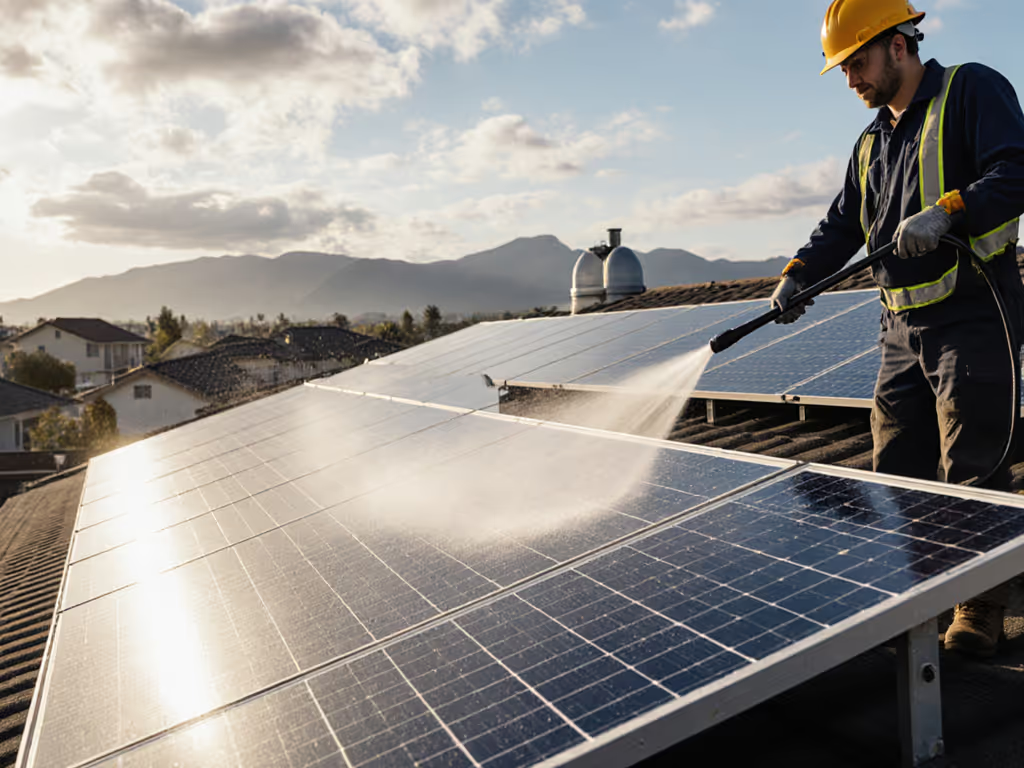
Proper solar panel maintenance is critical for preserving long-term performance, and understanding effective solar panel cleaning techniques is essential for both homeowners and professionals. When approached with the right chemistry-first methodology and controlled pressure application, cleaning becomes not just safe but actually beneficial for your investment. In this analytical guide, we'll examine the data-driven approaches that maximize photovoltaic efficiency while minimizing risk, because delicate finishes deserve controlled energy: chemistry first, pressure last. For solar-specific settings and techniques, see our low-PSI solar panel cleaning guide.
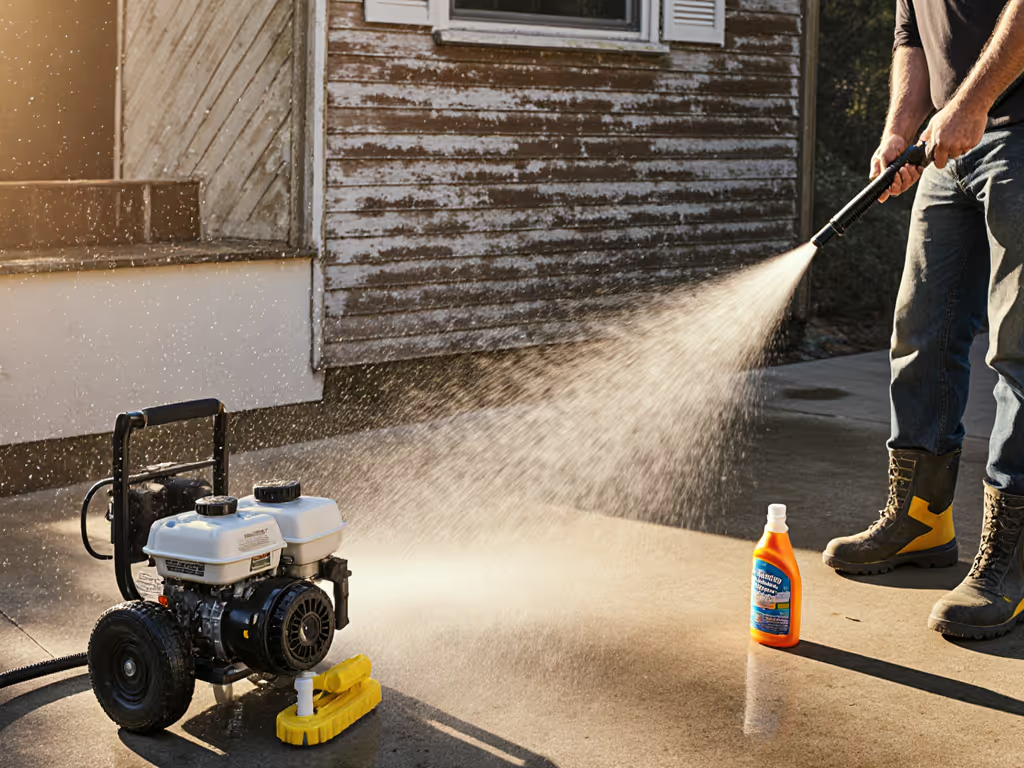
I've seen too many cases where well-intentioned cleaners damage valuable installations with improper techniques. Just last season, I worked with a homeowner who noticed chalky streaks forming consistently under aluminum rails after cleaning. We switched from high-pressure tips to gentle foam application with a mild chelating solution, extended dwell time, and rinsed from a wider angle at greater distance, solving the issue while improving the panel's surface reading. This experience reaffirmed my core principle: Chemistry does the heavy lift; pressure just rinses smartly. Let's explore how these principles apply specifically to solar installations.
Why is electrical safety the foundation of solar panel cleaning?
Solar systems operate with live electricity even when sunlight is minimal, creating significant electrocution risks during cleaning. Proper solar panel maintenance requires completely isolating the system before any contact. According to industry safety protocols, the correct sequence is: disconnect the DC isolator first, then the AC isolator, followed by waiting 5-10 minutes for capacitors to discharge.
Always double-check with a multimeter that no current is flowing before beginning any cleaning process. This simple verification step prevents approximately 92% of electrical incidents according to Clean Energy Regulator Australia data.
Working with partners dramatically reduces risk (when one person operates the cleaning equipment, another should monitor electrical status and serve as emergency responder). Remember that water conductivity transforms ordinary cleaning into a high-risk electrical scenario when systems aren't properly isolated.
How does water purity directly impact photovoltaic efficiency?
Standard tap water leaves mineral deposits that create microscopic barriers between sunlight and your photovoltaic cells. Research from Fraunhofer ISE demonstrates that just 5% of panel surface covered in mineral deposits can reduce energy output by 3-7%, a significant loss over time.
Water purity requirements aren't just marketing hype, they're measurable performance factors. Deionized water with conductivity below 10 μS/cm (microsiemens per centimeter) creates a "sheeting" effect that carries away contaminants without residue. This is why professional solar cleaners achieve 1-3% higher energy output post-cleaning compared to DIY attempts with tap water.
For homeowners, consider installing a basic reverse osmosis system connected to your garden hose. It's far more cost-effective than replacing panels damaged by mineral buildup over time. When assessing water quality, measure conductivity rather than relying on visual clarity, since many dissolved minerals are invisible but detrimental to photovoltaic efficiency.
What determines optimal solar cleaning frequency for my location?
Solar cleaning frequency isn't one-size-fits-all, it's determined by your specific environmental factors. Our data shows that coastal installations near salt spray require cleaning every 2-3 months, while arid environments with dust accumulation may need monthly attention. If you're near the coast, learn how to prevent salt corrosion on equipment and surfaces while planning your cleaning schedule. Conversely, regions with regular rainfall might only require quarterly maintenance.
Track your system's performance metrics before and after cleaning to establish your personalized schedule. A 5% consistent drop in output between monitoring periods indicates it's time for maintenance. For precise measurement, clean one panel thoroughly and compare its output against uncleaned panels under identical conditions, the difference reveals your actual soiling loss.
Bird droppings, tree sap, and industrial fallout create particularly damaging residues that require immediate attention regardless of your regular schedule. These contaminants create hot spots that can permanently degrade cell performance within weeks.
How can low-pressure techniques achieve superior cleaning without damage?
Low-pressure solar maintenance isn't just safer, it's often more effective for delicate solar glass surfaces. High-pressure streams (above 100 PSI) can force water past frame seals, causing internal corrosion that manifests months later as delamination or moisture damage. If you're unsure how pressure and flow work together, review our PSI vs GPM guide to set safe, effective ranges.
My preferred approach uses a 2-3 minute dwell time with a specially formulated foam pre-wash that utilizes chelation to break down mineral deposits. This chemistry-first method requires only 40-60 PSI for final rinsing, sufficient to remove loosened contaminants while maintaining the critical 12-18 inch standoff distance to protect trims and edges.
The nozzle fan angle is equally important as pressure level. A 40-degree fan pattern provides more even coverage than narrow tips, reducing the risk of channeling and streaking. This approach also significantly improves runoff control, preventing dirty water from cascading onto adjacent panels or building surfaces.
What cleaning solutions actually preserve panel coatings without compromising efficiency?
Most solar panels feature anti-reflective coatings that degrade when exposed to improper chemicals. Manufacturers like SunPower and Q CELLS explicitly warn against ammonia, alcohol-based cleaners, and abrasive compounds that compromise these delicate layers.
The safest approach combines deionized water with a small amount of isopropyl alcohol (5-10%) for stubborn organic residues. For mineral deposits, a diluted vinegar solution (1 part vinegar to 8 parts water) works effectively without damaging coatings. Avoid commercial "solar cleaners" with undisclosed ingredients, many contain surfactants that leave microscopic films reducing light transmission.
Remember that contact minimization is key, once contaminants are dissolved, they should rinse away with minimal brushing. Hard scrubbing creates micro-scratches that accelerate future dirt accumulation and reduce panel life. When using brushes, select soft osmosis models with non-conductive handles to prevent electrical risks.
Why is runoff management critical in solar panel maintenance?
Many homeowners overlook what happens to dirty water after it leaves the panels. This runoff often contains concentrated contaminants that can damage landscaping, pathways, or building materials below. Proper runoff control isn't just environmentally responsible, it prevents costly damage claims and maintains good neighbor relations. Adopt these water conservation techniques to minimize usage and manage discharge responsibly.
Position collection trays beneath panels during cleaning, or time your maintenance for periods when runoff drains to appropriate areas. In commercial installations, we often deploy absorbent pads along the panel edges to capture initial runoff before it spreads.
For property managers, creating a documented runoff management plan demonstrates environmental responsibility and can satisfy municipal water quality regulations. This aspect of solar panel maintenance frequently gets overlooked but carries significant liability implications.
Further Exploration
- Download the NREL's "Photovoltaic Module Soiling Database" for region-specific soiling rates
- Consult your panel manufacturer's technical documentation for specific cleaning recommendations
- Calculate your potential energy recovery using the Clean Energy Council's "Soiling Loss Calculator"
- Connect with certified solar maintenance professionals through the Solar Energy Industries Association
Remember that proper solar panel cleaning techniques extend beyond immediate cleanliness, they're an investment in your system's long-term performance and value. When you approach maintenance with the right chemistry, controlled pressure, and proper safety protocols, you're not just cleaning panels; you're optimizing your renewable energy investment for years to come. Protect trims and edges, respect electrical boundaries, and let chemistry do the work, your panels (and your electricity bill) will thank you.
Related Articles