Safe Trex Power Washing: PSI Setup Guide
By Kai Mendes • 23rd Mar
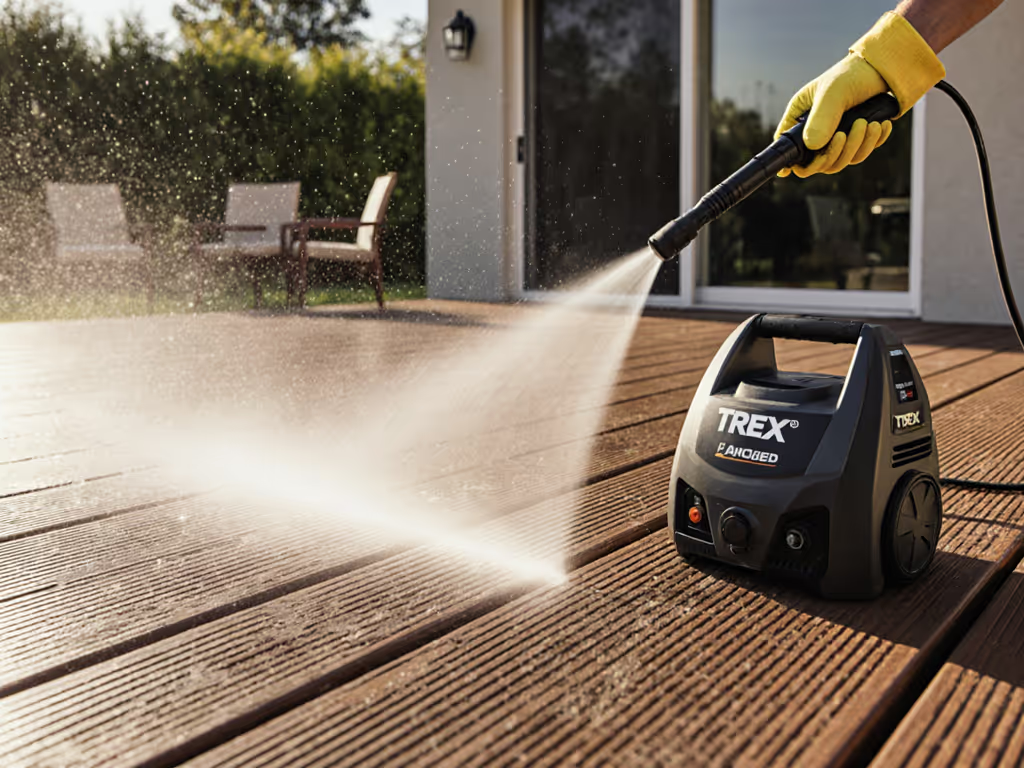
Your Complete FAQ for Finish-Safe Cleaning Techniques
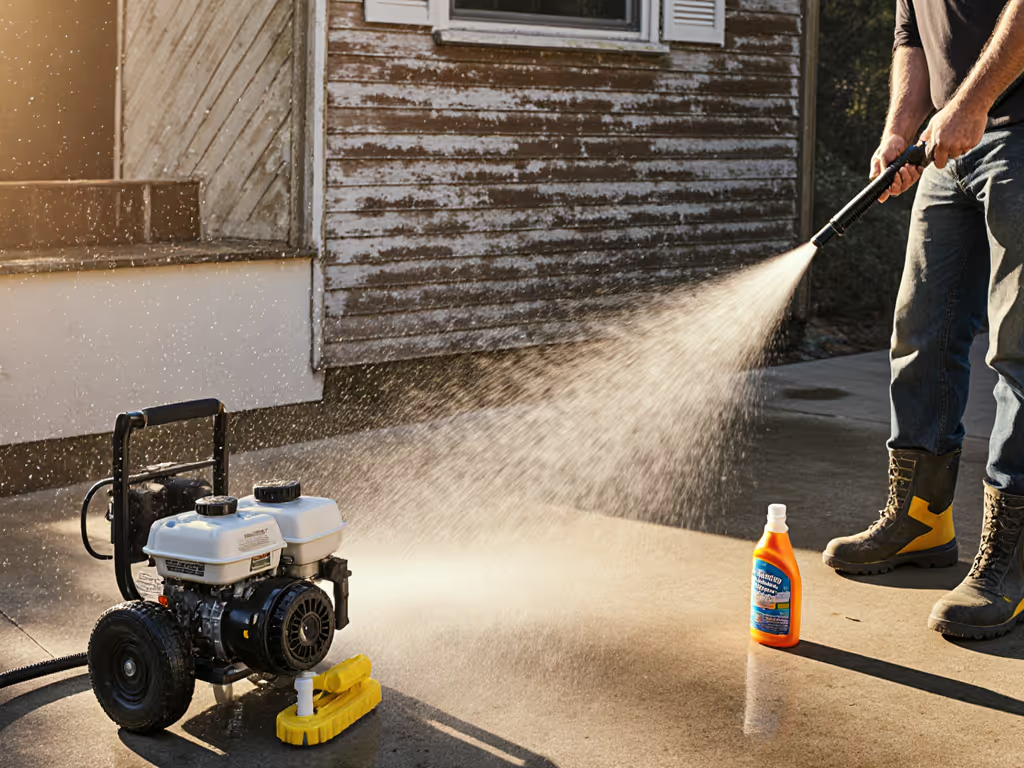
If you've bought a Trex deck (or you're weighing whether to), you're already thinking about the long game. Composite decking doesn't rot or splinter like wood, but it can be scarred. The gap between "spotless" and "permanently etched" is narrower than most homeowners realize, and it comes down to one thing: power washing decking with the right PSI, nozzle angle, and standoff distance. This guide walks through the most common questions I hear on the bench, grounded in manufacturer specs and repeatable, measured data. If you want a quick refresher on how pressure and flow interact, see our PSI vs GPM guide.
What PSI Range Is Safe for Trex?
The answer lives in a specific window: 1,500 to 3,100 PSI. Below 1,500 PSI, you're often just rinsing; above 3,100 PSI, you risk etching, stripping, and voiding your warranty. The Trex official guidance is clear, and it's supported by real-world reports from users and contractors.
But here's where most people stumble. They conflate "safe" with "ideal." The threshold is not the target. For routine maintenance (seasonal algae, pollen, light grime), you can accomplish the job at 1,500 PSI with a fan nozzle and proper standoff. Think of it as the baseline: slower, but damage-proof. For stubborn concrete dust, heavily oxidized buildup, or post-construction stains, the full 3,100 PSI range exists for a reason.
We measure minutes, gallons, and decibels. Claims earn their keep. The difference between 1,500 and 3,100 PSI on the same surface will show in cleaning rate (sq ft/min), water consumption per square foot, and total job time. Same-day, side-by-side testing reveals that stepping up to 2,400 to 2,800 PSI with a 40-degree fan often cuts cleaning time in half compared to 1,500 PSI with a 25-degree tip, while actual water use per square foot can drop, not rise, because you're moving faster and avoiding redundant passes. For ways to minimize consumption without sacrificing results, see our water conservation techniques.
Which Nozzle Angle and Orifice Size Matter Most?
Nozzle angle is your biggest lever after PSI. A 25-degree nozzle delivers more concentrated force per unit area; a 40-degree fan spreads the same pressure over a wider footprint. The tradeoff: narrower tips clean harder but slower; wider fans cover more ground but with less point intensity.
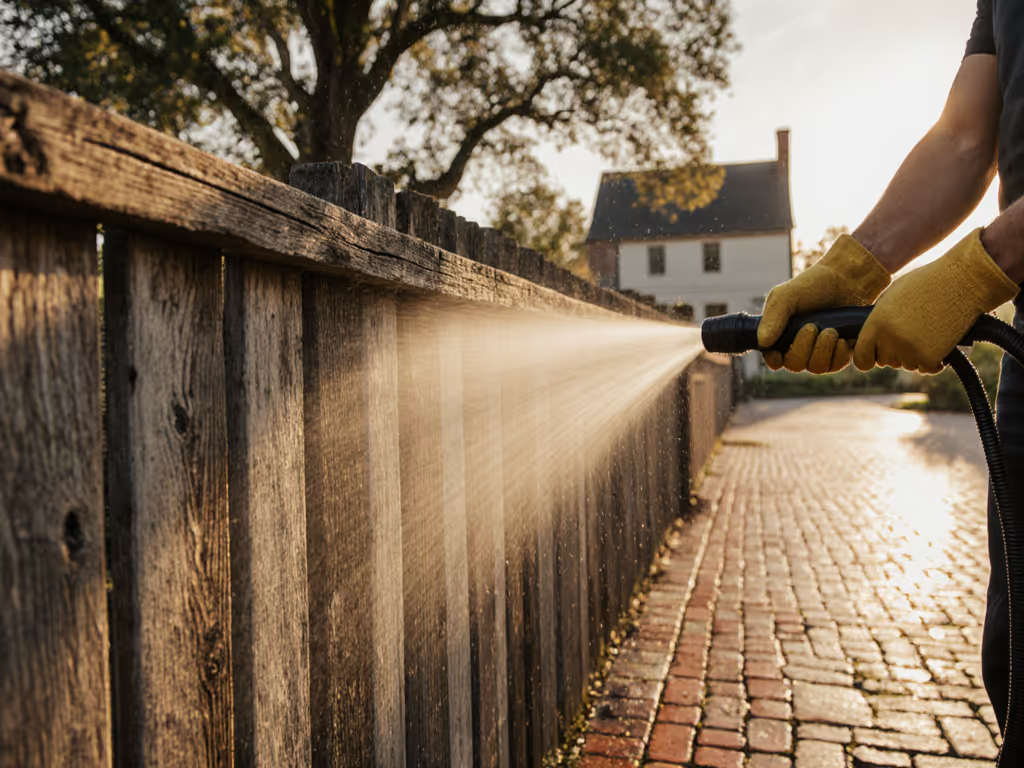
For Trex safe cleaning techniques, always use a fan nozzle (never a 0-degree or 15-degree stream). The fan disperses pressure, reducing the peak impact force on the composite shell. On our bench, a 40-degree fan at 2,400 PSI and 8 inches standoff produces a cleaning rate of approximately 18 to 22 sq ft/min on lightly soiled Trex, versus 6 to 9 sq ft/min at 1,500 PSI with a 25-degree tip. Orifice size (the hole diameter) determines flow rate for a given PSI; larger orifices pass more water. Match your orifice to your machine's GPM (gallons per minute) and the PSI you select.
Pick the widest angle that still removes the buildup without overshooting into risk territory. Start with a 25-degree tip and move to 40-degree only if needed. Clean with the grain of individual boards to avoid cross-scoring.
What Standoff Distance Is Required?
Keep the nozzle a minimum of 8 inches from the deck surface. Some guidance suggests 6 inches, but 8 inches is the safer margin and aligns with official Trex recommendations. At 8 inches with a 40-degree nozzle, pressure disperses harmlessly; at 2 to 3 inches with the same nozzle and PSI, you risk white specks and surface compromise.
Do not let the spray pressure spike by creeping closer to compensate for slow cleaning. That's the exact mistake that etches decks. Instead, adjust PSI within the safe window or nozzle angle; do not adjust distance. Water intrusion prevention starts with respecting standoff distance. Concentrated spray can force water into seams and between boards.
Should I Use Detergent, and What Kind?
Yes, detergent is essential for stubborn buildup and for decking material preservation. For Trex, warm soapy water suffices for light grime on high-performance formulations like Transcend, Enhance, and Select. For older composite or heavily soiled decks, a composite-specific cleaner or a hydroxyl-based (HW) mix performs reliably without risk.
The recipe that works on our test deck: HW mix applied at low pressure, allowed to dwell for 8 to 10 minutes, then rinsed with medium pressure (1,800 to 2,000 PSI) and a soft brush scrub for any remaining spots. Do not exceed the pressure threshold while scrubbing. Soft water (filtered or rainwater) prevents mineral streaking that hard-water rinses leave behind. For mix ratios that are safe for composites, try our eco-friendly detergent recipes.
Avoid bleach-heavy or acid-based cleaners unless the manufacturer explicitly approves them. Check the product's SDS and cross-reference with your deck's warranty documentation.
What's the Deck Maintenance Schedule to Avoid Buildup?
Facing algae and mildew buildup head-on prevents crisis cleaning and damage risk. A robust deck maintenance schedule looks like this:
- Spring and fall: light rinse with a soft brush and warm water (no pressure washer needed)
- Mid-summer and post-rain seasons: soft wash at 1,200 to 1,500 PSI with a 40-degree fan, 10-inch standoff, and biodegradable soap to prevent algae colonization
- Annual deep clean (once per year): full wash at 1,800 to 2,200 PSI with detergent and a soft brush for stubborn spots
This rhythm keeps composite surface protection high and minimizes the temptation to use aggressive pressure. For broader timing guidance around the home, check our surface-specific schedules. A deck cleaned monthly stays a deck cleaned safely; a deck ignored for two years demands 3,100 PSI heroics and carries real risk.
Can I Use a Surface Cleaner on Trex?
Yes, and a quality surface cleaner is one of the smartest moves for water intrusion prevention. A surface cleaner (a spinning attachment that evens pressure across a wide path) reduces pressure concentration at any single point, even at higher PSI. On Trex, a surface cleaner typically operates at 2,000 to 2,600 PSI and covers 16 to 20 inches in a single pass, with cleaning rates of 35 to 50 sq ft/min depending on the deck's condition and grit.
The downside: surface cleaners are heavier, require more water (higher GPM), and take practice to avoid lines at pass edges. But for large decks, the time and finish-safety payoff justifies the learning curve. Always confirm the cleaner is rated for composite before purchasing.
What If My Deck Is Already Etched or Scarred?
If damage has already occurred, power washing won't restore it. A lower PSI and fine-grit deck restainer or stain can mask minor etching, but structural compromise is permanent. This reinforces the cardinal rule: if you're not confident in your setup, soft wash or hire a professional. Rework costs more in time and money than preventing the mistake.
Moving Forward: Build Your Setup Recipe
The foundation of power washing decking safely is writing down your exact parameters: PSI, nozzle angle, standoff distance, detergent type and dwell time, stroke pattern, and the cleaning rate you achieved. Run the same deck side-by-side twice with different settings, log the results, and you'll internalize what works. If you can't measure finish-safe speed, you can't improve it.
For decks older than 10 years, start conservative: 1,500 PSI, 40-degree fan, 10-inch standoff, soft brush, and biodegradable soap. Work up only if the buildup demands it. For newer high-performance Trex, you have more latitude, but discipline still wins. Respect the PSI window, honor the standoff distance, and your deck will stay beautiful for decades.
Related Articles