
Gutter-Safe Pressure Washer Nozzles: Top Attachments Compared
By Sofia Alvarez • 26th Nov
Your gutters deserve more than guesswork, they need the right pressure washer attachment paired with an understanding of pressure washing nozzles that will not send shingles flying or leave streaks that scream "amateur hour." I've seen too many DIYers approach roof gutter maintenance with the same nozzle they'd use on concrete, only to create expensive mistakes that need professional fixes. Clarity and sequence prevent damage and deliver confidence. That's why I've created this stepwise guide to choosing attachments that work with your gutters, not against them.
As someone who's turned complex setups into simple checklists for first-timers, I've learned that success begins with understanding what not to do. Just like I wrote a fence checklist for a teen doing his first job (starting with a test patch, 40° nozzle, two passes with overlap, and rinse-to-sheen), we need equally conservative starting points for elevated surface cleaning. Gutters are unforgiving; one misstep can mean water damage, loose shingles, or worse. For a broader safety foundation before you start, see our pressure washer safety guidelines. If it isn't repeatable, it isn't teachable or safe.
Here are my top gutter-safe pressure washer attachments, tested through dozens of jobs and refined into a simple decision path that puts safety first while delivering pro results.
My Methodology: The Gutter Cleaning Checklist
Before we dive into specific attachments, let's establish the safety-first checklist I use with every new client. This is not just theory, it is what keeps me employed:
- Pre-rinse gutters with low pressure to loosen debris
- Always start with widest nozzle angle (60°) and work narrower only if needed
- Maintain minimum 18-inch standoff distance from gutters
- Control walk speed to ensure thorough coverage without overspray
- Overlap each pass by 50% for consistent cleaning
- Pause and inspect every panel before moving to next section
Now, let's compare the top attachments that make this checklist work.
1. The 60° Black Nozzle: Your Detergent Delivery Workhorse
The black nozzle (60° angle) is your safest starting point for gutter debris removal. Unlike narrower options, it delivers a gentle, shower-like pattern that will not blast shingles loose or force water under roofing. This attachment works by activating your pressure washer's chemical injector, making it dual-purpose for detergent application and final rinse.
Why it shines for gutters:
- Water pressure mimics a gentle rain, preventing damage to fragile gutter seams
- Perfect for applying cleaning solutions before final rinse
- Creates minimal splashback into your eyes or clothing
- Works exceptionally well on clogged downspouts when angled correctly
Pro Tip: Always do a test patch on an inconspicuous area first. If you are using a detergent, allow proper dwell time (usually 3-5 minutes) before rinsing. Prefer non-toxic mixes? Try our eco-friendly pressure washing detergent recipes. For gutter cleaning, I prefer to start with this nozzle even for the final rinse. It is surprisingly effective when you adjust your walk speed to match the debris level.
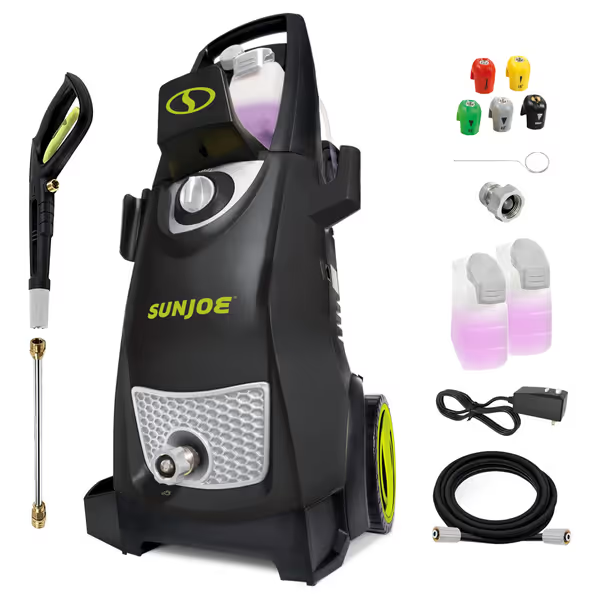
Sun Joe Electric Pressure Washer SPX3000
Effortless cleaning with precision control to protect diverse surfaces.
$169
Max Pressure2030 PSI (PWMA Certified)
Max Pressure2030 PSI (PWMA Certified)
Pros
Dual tanks for flexible, finish-safe detergent application.
5 quick-connect tips for multi-surface versatility.
Cons
Some users report units stopping or not turning on.
Pressure may not be sufficient for all heavy-duty needs.
Customers find the pressure washer to be worth the price and appreciate its powerful motor, easy assembly, and good cleaning performance, particularly noting its effectiveness on decks. The product is easy to use, with one customer mentioning it's simple to set up for spraying. While some customers report excellent pressure, others find it not high enough for their needs. The functionality receives mixed reviews, with several customers reporting that their units stopped working or wouldn't turn on.
Customers find the pressure washer to be worth the price and appreciate its powerful motor, easy assembly, and good cleaning performance, particularly noting its effectiveness on decks. The product is easy to use, with one customer mentioning it's simple to set up for spraying. While some customers report excellent pressure, others find it not high enough for their needs. The functionality receives mixed reviews, with several customers reporting that their units stopped working or wouldn't turn on.
2. The Adjustable Vario Nozzle: Precision Control For Tricky Angles
An adjustable nozzle (often called a vario nozzle) lets you select between 20° and 60° spray patterns with a simple twist. This versatility makes it invaluable for downspout cleaning, where you may need to switch between wider patterns for gutters and slightly narrower ones for stubborn vertical sections.
Why it shines for gutters:
- Eliminates constant nozzle swapping mid-ladder
- Lets you fine-tune pressure on problem spots without changing equipment
- The 40-60° range provides optimal balance for most gutter materials
- Reduces fatigue from constantly reaching for different attachments
Pro Tip: When cleaning gutters with an adjustable nozzle, start fully opened (60°), then gradually narrow the spray only where absolutely necessary. I always remind first-timers: "If you're tempted to go below 40°, pause and inspect every panel first." That is when you will spot warning signs like pitting or moisture seepage that indicate you are about to damage the surface.
3. The 40° White Nozzle: The Goldilocks Option For Most Gutters
The white nozzle (40° angle) strikes the perfect balance for most gutter cleaning scenarios, wide enough to prevent damage yet focused enough to handle moderate debris. This is my go-to attachment for aluminum and vinyl gutters where you need slightly more cleaning power than the black nozzle provides.
Why it shines for gutters:
- Optimal cleaning power without risking damage to most gutter materials
- Creates a consistent fan pattern that covers gutter width in 1-2 passes
- Less prone to overspray onto windows or siding than narrower nozzles
- Works well for both debris removal and final rinse
Pro Tip: When using the 40° nozzle, maintain at least 24 inches of standoff distance from gutters. This is where controlling your walk speed becomes critical. You want to move slowly enough for thorough cleaning, but not so slow that you concentrate too much pressure in one spot. Practice your stroke on a less visible section first to dial in your technique.
4. The Telescoping Wand: Your Safety Anchor For Elevated Cleaning
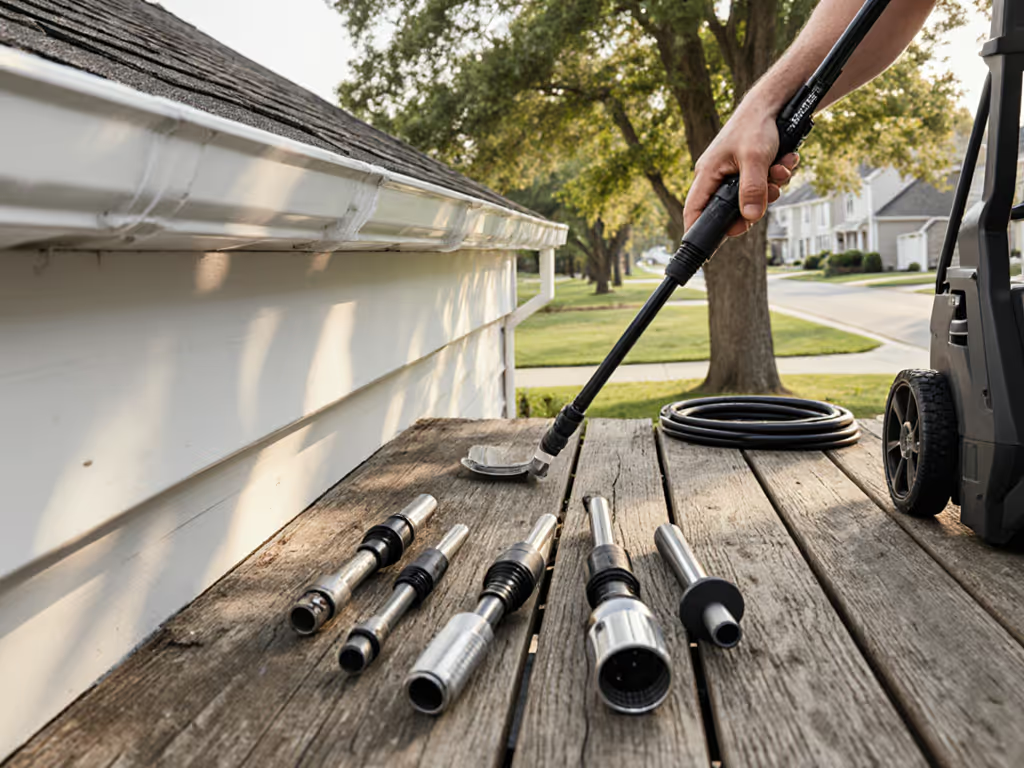
While not a nozzle per se, a telescoping wand with built-in nozzle rotation is essential for elevated surface cleaning. Look for models with 18-40 inch extension and 180° rotation at the nozzle head, this lets you maintain a safe distance from gutters while precisely directing your spray.
Why it shines for gutters:
- Eliminates dangerous ladder stretching and repositioning
- Allows you to maintain proper standoff distance consistently
- Reduces fatigue during extended cleaning sessions
- The rotation feature helps hit difficult angles without repositioning the ladder
Pro Tip: Always do a pre-rinse at maximum extension to verify your water pressure holds up. Many users do not realize that longer wands can reduce effective pressure, so test at full extension before committing to your cleaning pattern. For dialing in power without damage, this PSI vs GPM guide explains how flow and pressure work together. And remember, keep your feet planted firmly on the ladder rungs, not the steps.
5. The Low-Pressure Surface Cleaner: For Total Gutter Face Cleaning
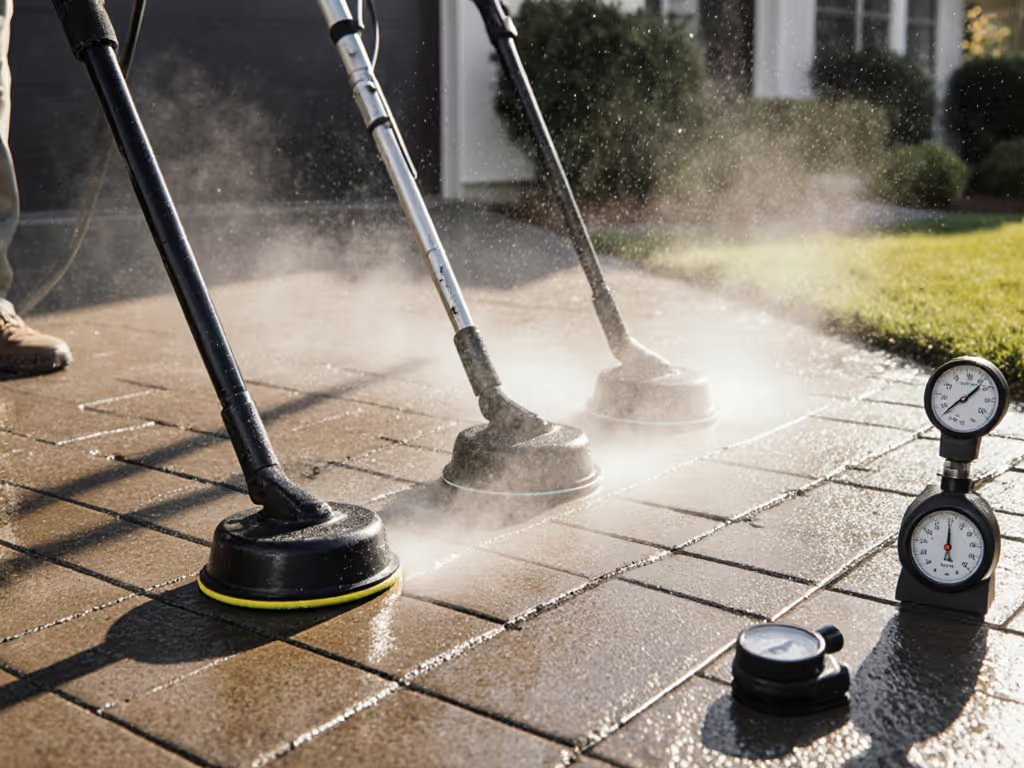
Surface cleaners (also called rotating cleaners) use multiple nozzles in a housing that rotates as you push it along the surface. To choose the right unit and avoid streaks, check our surface cleaner comparison. While typically used for flat surfaces, specialized narrow models work wonders for gutter faces when paired with the right pressure settings.
Why it shines for gutters:
- Eliminates tiger-striping through consistent, overlapping coverage
- Delivers even pressure across the entire gutter face
- Reduces physical strain from constant trigger-pulling
- Creates uniform results that look professionally done
Pro Tip: When using a surface cleaner on gutters, select the widest nozzle setting (60°) and maintain slow, steady walk speed. These attachments work best when you can maintain consistent contact with the gutter face. Practice your stroke pattern on a less visible section first. Always remember to pause and inspect every panel before moving to the next section to catch any potential issues early.
Comparison Chart: Gutter-Safe Pressure Washer Attachments
| Attachment | Best For | Pressure Range | Safety Rating | Skill Level |
|---|---|---|---|---|
| 60° Black Nozzle | Detergent application, final rinse | 500-1200 PSI | ★★★★★ | Beginner |
| Adjustable Vario Nozzle | Mixed gutter conditions | 800-1800 PSI | ★★★★☆ | Intermediate |
| 40° White Nozzle | Aluminum/vinyl gutters | 1000-2000 PSI | ★★★☆☆ | Intermediate |
| Telescoping Wand | Hard-to-reach sections | Varies | ★★★★☆ | Beginner |
| Surface Cleaner | Uniform gutter face cleaning | 1200+ PSI | ★★★☆☆ | Advanced |
Remember: Always start with the widest nozzle angle and lowest pressure that gets the job done. It is far better to make two gentle passes than one aggressive one that causes damage.
Your Action Plan: Safe Gutter Cleaning In 5 Steps
Now that you have seen the top gutter-safe pressure washer attachments, it is time to put this knowledge into action. Follow this simple checklist for damage-free results:
- Pre-rinse gutters with black nozzle to remove loose debris
- Apply detergent with black nozzle, allow 3-5 minutes dwell time
- Test patch your cleaning method on a small section
- Clean with 40° or 60° nozzle using proper walk speed and overlap
- Pause and inspect every panel before moving to next section
For your first gutter cleaning project, I recommend starting with the Sun Joe SPX3000 electric pressure washer. Its built-in detergent system works perfectly with the black nozzle for safe gutter cleaning, and the lightweight design reduces fatigue during extended use. Remember, success with pressure washing is not about brute force. It is about precision, patience, and the right attachments.
Your gutters are your home's first line of defense against water damage, do not risk them with improper techniques. Grab your pressure washer, select the widest nozzle you have, and start with a test patch. By following this conservative approach to roof gutter maintenance, you'll build confidence with every panel you clean. When in doubt, step back, lower the pressure, and pause and inspect every panel. Your future self will thank you when those gutters look professionally cleaned without a single mark of damage.
Related Articles

Accessories & Attachments
Surface Cleaner Comparison: Avoid Costly Mistakes
Match PSI/GPM and nozzle angle to each surface using real metrics - cleaning rate, water per square foot, and dB(A) - to clean faster without streaks, etching, or wasted water. Get optimal ranges and simple field tests to validate and dial in a finish-safe, efficient setup.